 Gel Polish
 Nail Lacquer
 Acrylic
 Nail Tools
 LED Lamps
 Pedicure Chairs
 Nail Art
 Furniture
Acetone Trivia: 7 Things You Probably Didn't Know About the Salon's Most Familiar Remover
August 26, 2026
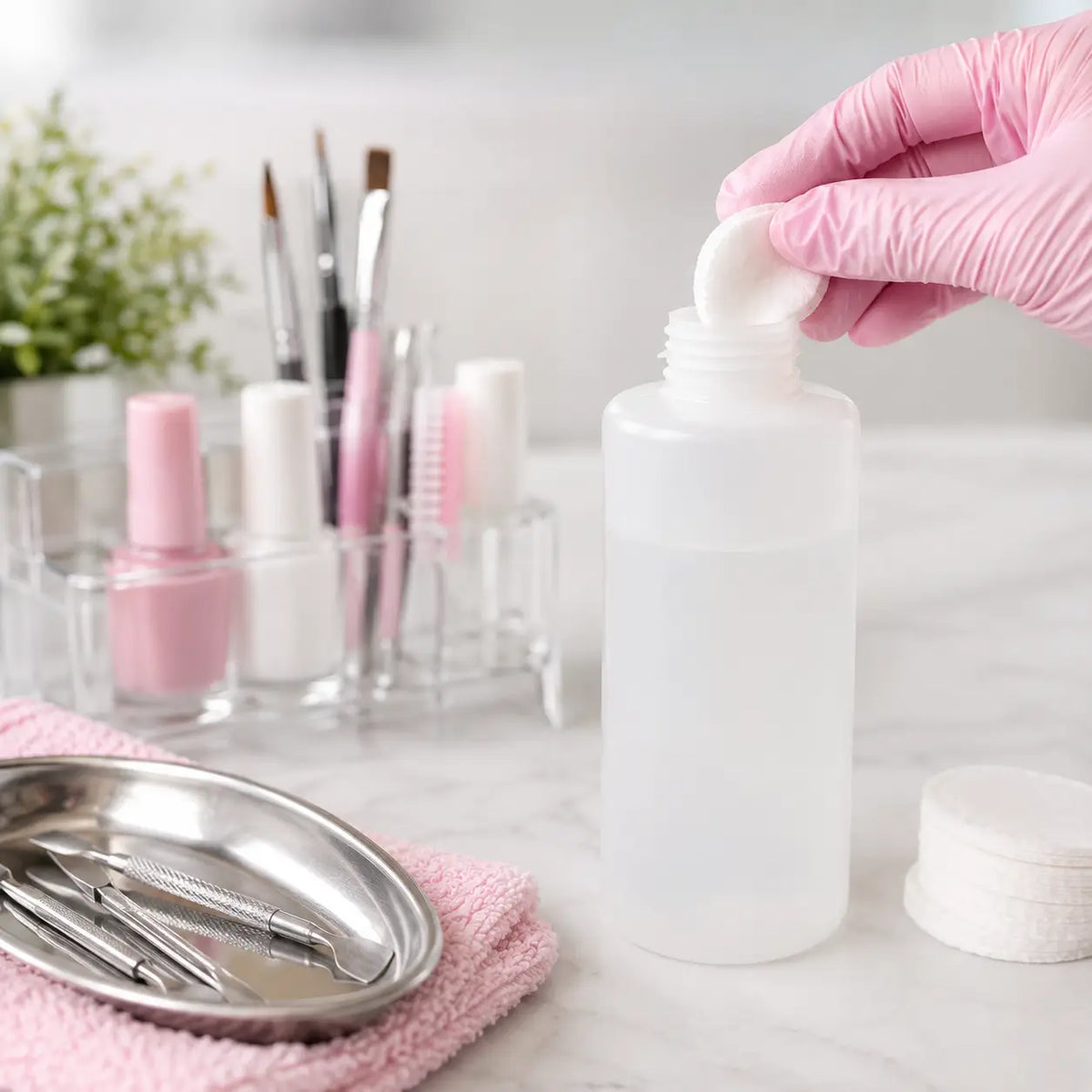
Walk into almost any professional nail salon and there's a good chance you'll find a bottle of acetone somewhere nearby.
It's familiar.
It's useful.
And compared with all the colorful products on a nail technician's workstation, it might be one of the least exciting-looking liquids in the room.
But acetone has some surprisingly interesting characteristics.
It's more than simply "the stuff that removes nail polish." Its chemistry, evaporation, versatility, and interaction with different nail products make it an essential part of many professional nail services.
Here are seven things you may not know about this familiar salon staple.
1. Acetone Isn't Just a Nail Product
Acetone is actually a chemical solvent called propanone.
It's a colorless liquid that evaporates readily and is used for many purposes beyond nail care.
You'll find acetone used as a solvent in various industrial and commercial applications, including cleaning and manufacturing processes.
So when a nail technician reaches for acetone, they're using a chemical with a much bigger resume than its salon job suggests.
Nail care just happens to be one of its most recognizable uses.
2. It Evaporates Surprisingly Quickly
Ever wondered why an open container of acetone seems to disappear faster than expected?
Acetone is highly volatile, meaning it evaporates readily at room temperature.
That characteristic is useful in nail services because it doesn't remain on the surface indefinitely.
But it also means that leaving a container open can result in unnecessary evaporation.
For salons, keeping acetone properly stored and containers closed when not in use isn't just about saving product.
It's also part of good workplace chemical handling.
3. Acetone Is Extremely Good at Dissolving Certain Nail Products
Here's where acetone earns its reputation.
Acetone is an effective solvent for many nail coatings and enhancement materials, which is why it's commonly used for removing traditional nail polish and soaking off certain soak-off gel products.
However, not every artificial nail product dissolves in acetone.
Some enhancement materials are designed to be filed off rather than soaked away.
That means "just soak it in acetone" isn't a universal removal method.
The appropriate removal technique depends on the product.
4. Why Does Acetone Make Skin Feel So Dry?
This is one of the most noticeable things about acetone.
After prolonged or repeated contact, skin can feel dry or stripped of its natural oils.
That's because acetone can dissolve oils and lipids on the skin's surface.
This is one reason professional technicians try to keep unnecessary skin exposure to a minimum and follow appropriate handling practices.
It also explains why hand and nail care after product removal can feel particularly important.
After the removal process, moisturizing products can help restore a more comfortable feel to the skin.
5. It Has a Very Low Boiling Point
Here's a chemistry fact that helps explain several of acetone's personality traits.
Acetone boils at approximately 56°C (133°F) at standard atmospheric pressure.
That's considerably lower than water.
This relatively low boiling point contributes to its high volatility and rapid evaporation.
So when acetone seems to vanish quickly from a surface, there's some chemistry behind the disappearing act.
It's not trying to escape the salon.
It simply has a strong tendency to enter the vapor phase.
6. Acetone Is Highly Flammable
This is one fact that should never be treated as trivia alone.
Acetone is highly flammable.
Its vapors can ignite when exposed to an appropriate ignition source.
That means professional salons need to handle and store acetone appropriately, keep it away from flames and ignition sources, and follow applicable workplace safety requirements.
The same volatility that makes acetone useful also means it deserves respect.
A bottle of acetone may look harmless sitting beside a manicure table, but chemically speaking, it's not something to treat casually.
7. Not All "Removers" Are the Same
This is perhaps the most useful trivia for clients.
When someone says "nail polish remover," they may be referring to a variety of different formulations.
Some removers contain acetone.
Others are marketed as non-acetone removers and use different solvents.
Their performance can therefore vary depending on what they're trying to remove.
Acetone is particularly effective for many traditional polishes and certain soak-off systems, while other products may require different removal approaches.
So the strongest-smelling remover isn't necessarily the "best" remover for every situation.
The right choice depends on the nail product.
Why Salons Keep Acetone Nearby
After hearing all of that, it becomes easier to understand why acetone has earned its permanent place in professional nail environments.
It can help with:
- Removing traditional nail polish
- Removing certain soak-off gel systems
- Cleaning certain nail-product residues
- Supporting specific professional nail-service procedures
- Cleaning compatible tools or surfaces when appropriate
Its versatility makes it useful, but professional technicians also know when not to use it.
Knowing the material you're working with is just as important as having the solvent available.
Acetone Isn't Magic
There's a funny misconception that acetone can dissolve absolutely anything related to nails.
It can't.
Different nail products have different chemical compositions.
Some soften or dissolve in acetone.
Others remain relatively resistant and need filing or another removal technique.
That's why professional product knowledge matters.
A technician isn't simply choosing the strongest liquid.
They're identifying what they're trying to remove and selecting the appropriate method.
Why Proper Storage Matters
Because acetone evaporates readily and is highly flammable, storage deserves attention.
Containers should remain properly closed when the product isn't being dispensed or used.
It should also be kept away from heat, flames, sparks, and other ignition sources, following the product's safety information and applicable regulations.
For a busy salon, proper storage also helps reduce unnecessary product loss through evaporation.
In other words, keeping the cap on is both a safety habit and a money-saving habit.
The Smell Everyone Recognizes
There's another reason acetone is so recognizable.
Its strong characteristic odor is something many nail technicians and clients immediately associate with nail services.
But smell isn't a reliable way to judge whether acetone is "working better."
A stronger odor doesn't automatically mean stronger performance.
Good ventilation and appropriate workplace practices remain important when working with volatile solvents.
A Small Bottle With a Big Job
Acetone isn't glamorous.
It doesn't come in a rainbow of exciting colors.
It isn't the product clients choose when they're picking their manicure design.
Yet it can be one of the hardest-working liquids at a nail station.
It helps remove products, clean up certain residues, and prepare the workstation for whatever comes next.
Sometimes the most important salon products are the ones nobody talks about.
Final Thoughts
Acetone has been part of nail care for so long that it's easy to stop thinking about what makes it interesting.
But behind that familiar bottle is a highly volatile solvent with a surprisingly broad range of uses.
It evaporates quickly.
It dissolves many nail products effectively.
It can strip oils from the skin.
It boils at a relatively low temperature.
And it's highly flammable.
Most importantly, acetone works best when it's used for the right job and handled with the respect any professional chemical deserves.
So the next time you see that familiar bottle sitting at a salon workstation, remember:
It's not just nail polish remover. It's a little chemistry lesson hiding in plain sight.