 Gel Polish
 Nail Lacquer
 Acrylic
 Nail Tools
 LED Lamps
 Pedicure Chairs
 Nail Art
 Furniture
Clear, Pink, or White? How to Choose the Right Acrylic Powder for Every Service
November 25, 2026
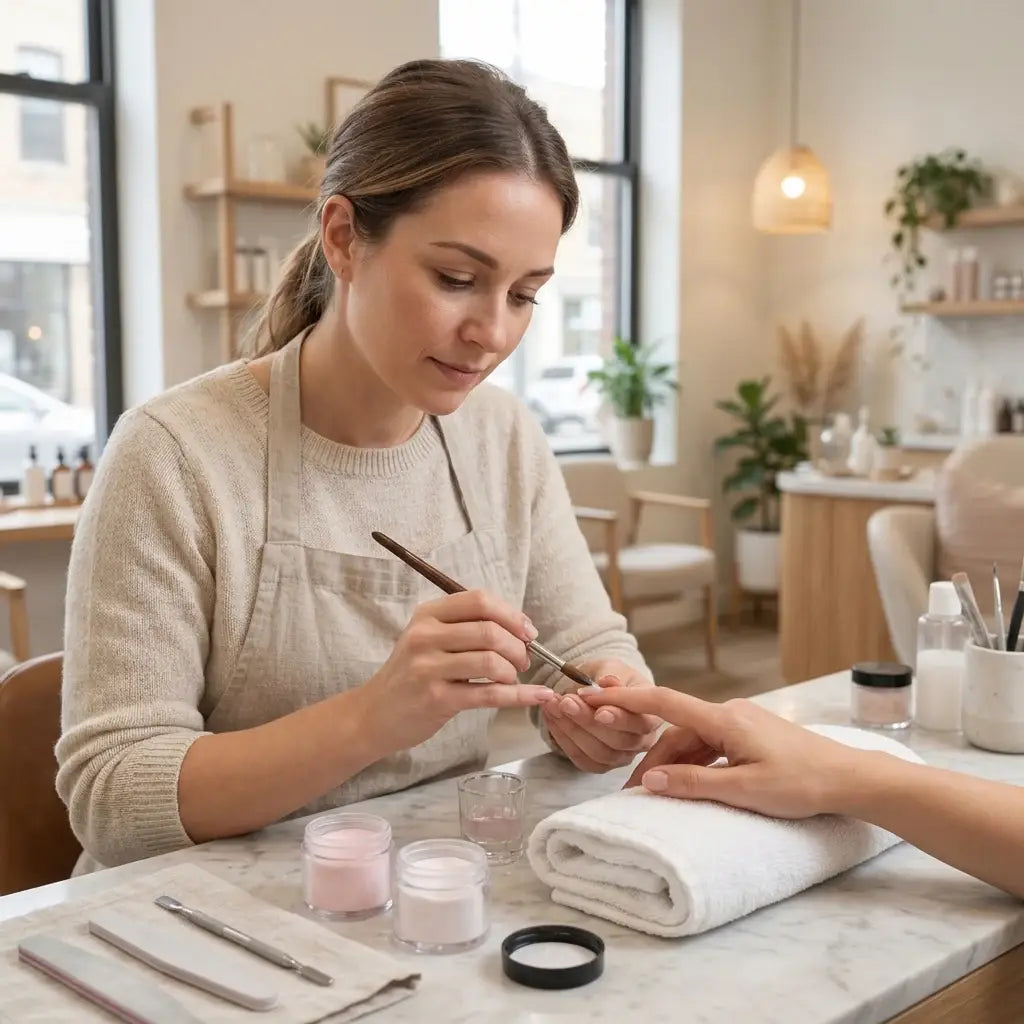
Walk down any acrylic aisle and the first thing you notice is the color of the powder in the jar — clear, pink, white, and every nude and cover shade in between. To a new tech it can look like a wall of nearly identical products. But those colors aren't just cosmetic: each one is formulated for a specific job, and choosing the right acrylic powder for the service in front of you is what separates a flat, cloudy set from one with depth and a clean smile line. Here's how to pick the right acrylic powder for every service you offer.
Why the Color of the Powder Matters
Acrylic powder color controls the finished look and how forgiving the application is. A clear powder disappears over whatever is beneath it; a pink adds warmth and a natural, healthy-looking base; a true white builds the crisp tip of a French. The wrong choice shows — a yellow-based nude over cool skin reads sallow, and a weak white gives you a gray, washed-out smile line. Matching powder to purpose is the fastest way to make your sets look intentional.
Clear: The Versatile Finisher
Clear powder is your overlay and encapsulation workhorse. Because it dries transparent, it's ideal for sealing in nail art, glitter, foils, or an inlaid design without clouding it, and for adding strength over natural nails or tips when you don't want to change the color underneath. It's also the go-to for encapsulating a sculpted extension where the color comes from polish or gel applied later. If you want what's beneath the acrylic to show through, reach for clear.
Pink & Nude Covers: The Natural Base
- Sheer pink: Adds a subtle, healthy flush over the nail bed — perfect under sheer or no polish for a "my nails but better" look.
- Cover / camouflage shades: More pigmented nudes that even out the natural nail, hide a lifted or discolored bed, and build a flawless base for a French or ombré.
- Warm vs. cool tones: Match the undertone to your client's skin — cool pinks for fair/cool skin, warmer nudes for deeper or olive tones — so the extension blends instead of standing out.
White: The French and Tip Builder
A quality white powder is what makes a French tip pop. The best whites are highly pigmented and non-porous so they lay down opaque in one pass and stay bright white rather than fading to gray or yellow. Look for a white with a smooth, creamy consistency — a chalky or grainy white is hard to control along the smile line and is the usual culprit behind a muddy or uneven French. The same white is also the base for colored ombré fades.
What Separates a Good Powder From a Lumpy One
- Consistent particle size: A finely milled, uniform powder wets out evenly with your monomer so the bead self-levels instead of sitting lumpy.
- Good pigment load: Strong, stable pigment means true color that doesn't yellow under the lamp or over time.
- Predictable set time: A reliable powder gives you enough working time to place and shape the bead, then cures hard and clear.
- Low yellowing: Quality clears and whites resist the ambering that makes cheap powders look dingy after a week.
Building Your Core Powder Lineup
Most techs can cover the vast majority of services with four powders: a clear for overlays and encapsulation, a sheer pink for natural sets, a pigmented cover nude for flawless bases and ombré, and a bright white for French and fades. From there you add color powders for nail art. Keeping that core stocked means you're never improvising the wrong shade mid-service — and your sets stay consistent client to client.
The Takeaway
Clear, pink, and white aren't interchangeable — they're a toolkit. Use clear to seal and strengthen, pink and cover nudes to build a natural base, and a strong white for crisp Frenches and ombré. Pair the right color with a finely milled, well-pigmented formula and your acrylic work looks cleaner, lasts longer, and photographs like a pro's.
Frequently Asked Questions
What's the difference between clear, pink, and white acrylic powder?
Each is made for a different job. Clear powder dries transparent, so it's for overlays and encapsulating nail art or glitter. Pink and nude cover powders build a natural-looking base over the nail bed. A pigmented white is for crisp French tips and ombré fades. Keeping all three on hand covers almost every service — browse acrylic powders to build your core lineup.
Which acrylic powder is best for a French manicure?
A highly pigmented, non-porous white powder. It lays down opaque in one pass and stays bright white instead of fading to gray or yellow, which is what gives a French a clean, crisp smile line. Look for a smooth, creamy consistency — chalky or grainy whites are hard to control along the smile line.
Why does my acrylic powder look lumpy or yellow?
Lumpiness usually comes from inconsistent particle size — a finely milled powder wets out evenly with your monomer and self-levels. Yellowing comes from low-quality pigment or clear that ambers under the lamp and over time. A quality, finely milled powder with a stable pigment load fixes both.