 Gel Polish
 Nail Lacquer
 Acrylic
 Nail Tools
 LED Lamps
 Pedicure Chairs
 Nail Art
 Furniture
Every Drop Counts: How Professional Nail Polish Pump Dispensers Help Salons Reduce Waste and Improve Service Efficiency
November 02, 2026
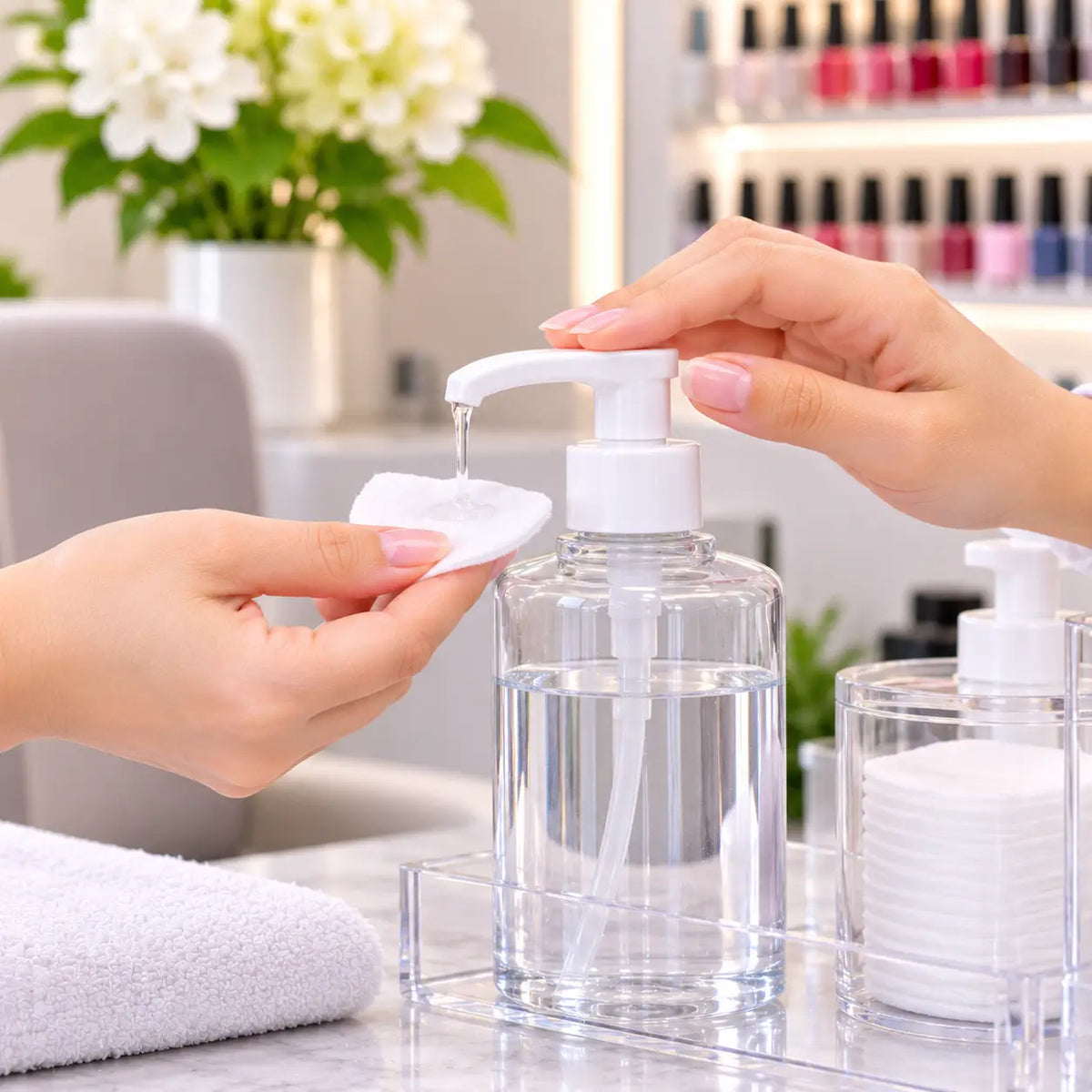
In a busy nail salon, even the smallest tasks can affect how smoothly appointments run. Technicians regularly reach for acetone, nail cleansers, alcohol, and other liquids throughout the day. Repeatedly opening bottles, pouring products, and handling containers can take time and sometimes lead to spills or unnecessary product waste.
Professional pump dispensers offer a simple solution. Designed to make liquid products easier to access, these practical salon essentials allow technicians to dispense controlled amounts with convenient pumping action instead of repeatedly pouring directly from bottles.
Although they may seem like a minor workstation accessory, the right dispensers can help salons maintain cleaner work areas, manage product consumption, and make everyday service procedures more convenient.
For salon owners looking to improve efficiency without making major equipment investments, professional pump dispensers are a small addition that can make daily operations more manageable.
Make Everyday Product Access Easier
Nail technicians use several liquid products during a typical appointment. From removing existing polish to cleaning the nail surface, these liquids are frequently needed throughout the service.
Traditional bottles often require technicians to pick up the container, open the cap, pour the desired amount, and close it again. Repeating this process throughout the day can interrupt the workflow.
Pump dispensers simplify access by allowing technicians to press the dispensing surface and release product onto a suitable lint-free wipe, cotton pad, or other appropriate applicator.
Depending on the dispenser design, this can offer several practical advantages:
-
Convenient one-handed dispensing.
-
Less handling of the original product container.
-
More controlled product access.
-
Reduced need to pour liquids directly from bottles.
-
Easier access during repetitive salon tasks.
For technicians working through back-to-back appointments, these small conveniences can add up.
Help Reduce Unnecessary Product Waste
Product waste is an ongoing concern for businesses that use professional liquids every day. Pouring directly from a bottle can sometimes release more product than necessary, especially when technicians are working quickly.
A pump dispenser can help make dispensing more controlled by delivering a measured or relatively consistent amount with each press, depending on its design.
This is particularly useful for frequently used liquids such as:
Acetone: Commonly used for removing traditional nail polish and certain nail products when appropriate.
Nail cleansers: Used in compatible nail systems to remove specific surface residues.
Isopropyl alcohol: Used for appropriate cleaning and preparation applications according to product instructions.
Other salon liquids: Certain compatible solutions can also benefit from convenient pump dispensing.
The actual amount released depends on the dispenser mechanism and how firmly it is pressed. Technicians should still dispense only what each service requires.
Over time, avoiding repeated over-pouring can help salons manage their consumable supplies more efficiently.
Keep the Original Product Bottles Easier to Manage
Professional salons often purchase frequently used liquids in larger containers to maintain an adequate supply.
However, repeatedly handling large bottles during individual appointments can be inconvenient. A smaller dispensing container can make everyday access easier while allowing the original supply to remain in a designated storage area.
This arrangement can help technicians:
-
Refill working dispensers when needed.
-
Keep frequently used liquids within convenient reach.
-
Reduce repeated handling of bulk containers.
-
Monitor how quickly different products are being consumed.
-
Maintain a more organized supply system.
It is important to use only containers and pump mechanisms compatible with the specific liquid being stored. For example, acetone can damage certain plastics and seals, so dispensers must be explicitly suitable for acetone use.
Never transfer a product into an unsuitable container simply because it fits the workstation.
Reduce Spills and Keep the Workstation Cleaner
Spilled liquids can create unnecessary cleanup during appointments. They may also damage certain workstation surfaces, equipment, or nearby materials.
Pump dispensers help reduce the need to pour liquids directly from larger bottles, making product handling more convenient.
A well-designed dispenser with a stable base and secure closure can also help minimize accidental spills during normal use.
For better workstation management:
-
Place dispensers on a stable, level surface.
-
Keep them away from the edge of the workstation.
-
Close or lock the dispensing mechanism when not in use.
-
Wipe away residue promptly.
-
Avoid overfilling containers.
-
Keep different products in their designated dispensers.
These habits help maintain a cleaner environment and make frequently used supplies easier to manage.
Choose the Right Dispenser for Each Salon Liquid
Not every pump dispenser is designed for every type of liquid. Choosing the correct container is essential for safe storage and dependable dispensing.
Before purchasing, consider the following features.
Material Compatibility
This is one of the most important factors. Some salon liquids contain strong solvents that can damage unsuitable plastic containers, seals, or dispensing mechanisms.
Always check the manufacturer's compatibility information before using a dispenser for acetone, alcohol, or other chemical products.
Dispensing Mechanism
Different designs release different amounts of liquid. Some feature a pump-top mechanism, while others use a push-down dispensing surface that transfers liquid onto a pad.
Choose a design that suits the products and application methods used in your salon.
Capacity
Smaller dispensers are convenient for individual workstations, while larger containers may be more practical for frequently used liquids.
The ideal capacity depends on how often the product is used and how frequently the salon can refill the dispenser.
Secure Closure
A reliable cap or locking mechanism helps prevent accidental dispensing and unwanted exposure when the container is not in use.
For volatile liquids such as acetone, use a dispenser specifically designed to minimize evaporation and compatible with the chemical.
Ease of Cleaning
Reusable dispensers should be easy to maintain according to the manufacturer's instructions. Consider whether the pump mechanism can be cleaned appropriately and whether replacement parts are available.
Prevent Cross-Contamination With Proper Product Handling
Convenience should never come at the expense of salon hygiene.
Pump dispensers must be handled properly to prevent contamination and maintain product quality.
Technicians should avoid touching the dispensing opening with used cotton pads, wipes, or other applicators. Products should be dispensed onto a clean applicator rather than allowing the applicator to contact the pump and then return to the container.
Additional good practices include:
-
Assigning separate dispensers to different products.
-
Never mixing different liquids in one container.
-
Cleaning reusable dispensers according to manufacturer instructions.
-
Keeping containers closed when not in use.
-
Avoiding the return of unused product to the original container.
-
Replacing damaged or contaminated dispensers.
These procedures help protect the salon's supplies and support consistent professional practices.
Proper Labeling Makes a Big Difference
When several dispensers look similar, technicians can easily confuse their contents if containers are not clearly identified.
A professional workstation should make it easy to recognize each product before dispensing.
Use clear, durable labels that identify the contents and include relevant safety information where required. Retain important hazard information from the original product labeling and safety data sheets.
Avoid relying on container color or appearance alone to identify liquids.
Proper labeling is particularly important when a salon uses acetone, alcohol, cleansers, and other products that may have different handling requirements.
Improve Daily Workflow Without Complicating the Workstation
A good salon workstation should make essential products easy to access without becoming crowded.
Pump dispensers can support this goal by giving frequently used liquids a dedicated place.
For example, a technician performing traditional manicures may keep a compatible polish remover dispenser nearby, while another workstation may have a separate dispenser for a suitable nail cleanser.
The key is to position products according to their actual use.
Rather than filling the workstation with unnecessary containers, identify the liquids used most frequently and select dispensers that make those tasks easier.
This approach supports a more practical setup while keeping supplies accessible during appointments.
Calculate the Business Value of Better Dispensing
Pump dispensers are generally a relatively small purchase compared with major salon equipment, but their value can extend beyond convenience.
Salon owners can evaluate their benefits by considering how much product is consumed, how often spills occur, and how much time technicians spend handling frequently used liquids.
A simple inventory review can help answer useful questions:
-
Which liquids are used most frequently?
-
Which products are commonly over-poured?
-
Which containers are inconvenient during appointments?
-
How often do dispensers need refilling?
-
Are the current containers compatible with the liquids being used?
Tracking these details helps businesses determine whether upgrading their dispensing system can reduce unnecessary consumption and improve daily operations.
The goal is not simply to purchase more accessories. It is to select practical supplies that solve recurring problems.
Build a More Efficient Salon Supply Collection
Pump dispensers work best as part of a thoughtfully selected collection of salon essentials.
Alongside compatible dispensers, technicians may need lint-free wipes, cotton pads, nail cleansers, polish removers, and other frequently used supplies.
Keeping these products available and organized helps prevent interruptions during appointments.
Salon owners should also maintain an appropriate refill schedule so dispensers do not unexpectedly run empty during busy periods.
By combining reliable dispensing containers with good inventory practices, businesses can make everyday service procedures more predictable.
Final Thoughts: Small Accessories Can Deliver Everyday Value
Professional nail polish pump dispensers may not be the most noticeable items in a salon, but they serve an important practical purpose. They make frequently used liquids easier to access, help technicians control dispensing, and reduce the need to repeatedly pour products from larger containers.
For salon owners, these benefits can contribute to less unnecessary waste, cleaner workstations, and more convenient daily operations.
The most important consideration is choosing dispensers made from materials compatible with the liquids being stored, maintaining proper labeling, and following safe handling procedures.
Explore professional pump dispensers and other salon workstation essentials at Lee Nail Supply to find practical supplies that help your technicians work efficiently and make every drop count.