 Gel Polish
 Nail Lacquer
 Acrylic
 Nail Tools
 LED Lamps
 Pedicure Chairs
 Nail Art
 Furniture
Not All Nippers Do the Same Job: Understanding the Different Tools Behind Professional Nail Care
August 19, 2026
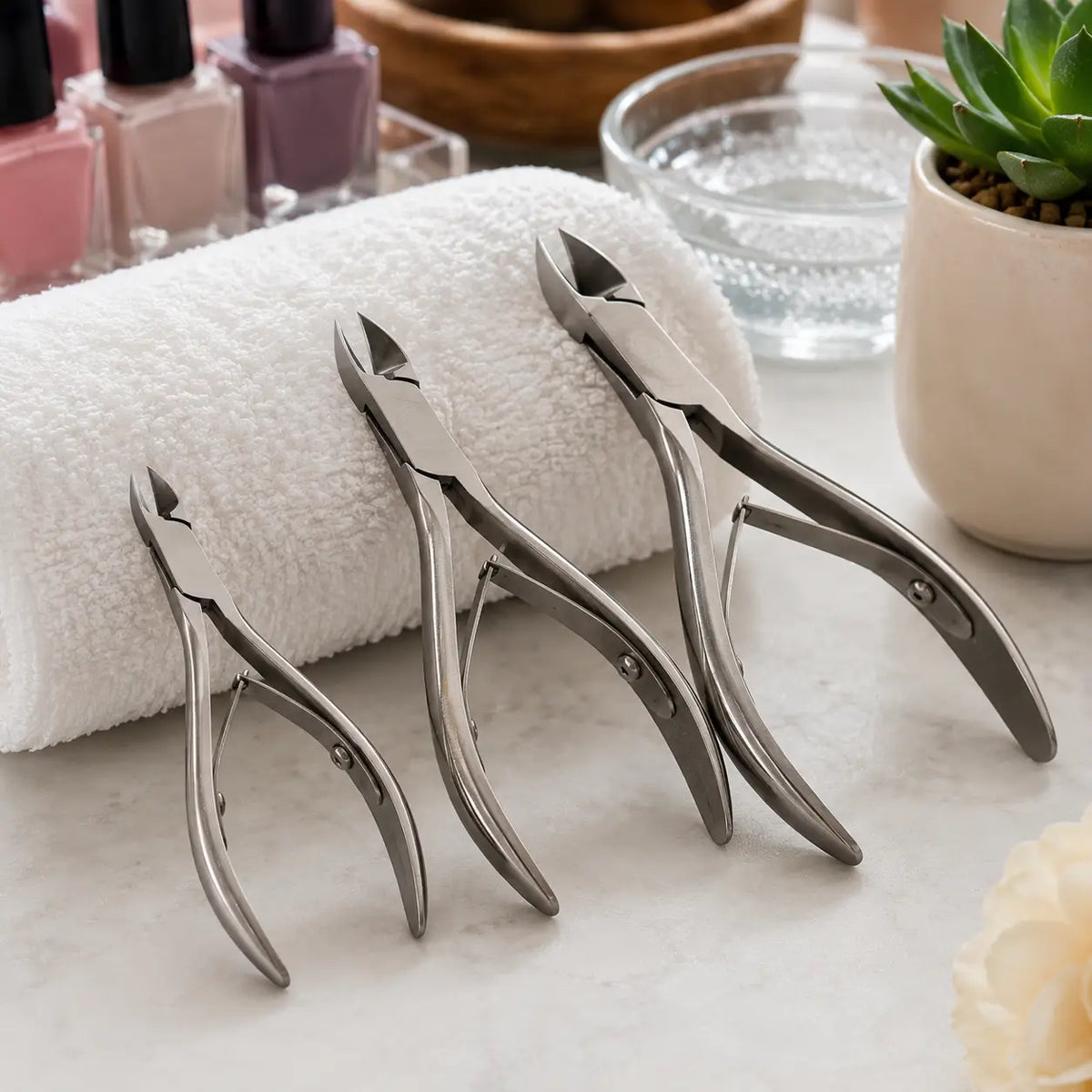
Walk into a professional nail salon and you'll notice something interesting.
Many of the tools on the workstation may look surprisingly similar at first glance. Small handles, sharp cutting edges, metal construction—yet they can have completely different purposes.
Nippers are a perfect example.
The word "nipper" can refer to several types of professional nail-care tools, and choosing the right one matters. A tool designed for delicate cuticle work isn't necessarily the right choice for trimming a thick toenail.
Understanding the differences can help technicians work more efficiently while maintaining better control during nail services.
What Is a Nail Nipper?
A nipper is a hand-operated cutting instrument designed to make controlled cuts.
Unlike ordinary household nail clippers, professional nippers are available in different shapes and sizes for specific applications.
Their cutting edges, jaw size, handle design, and overall construction can vary depending on what they're intended to cut.
That specialization is what makes the different types useful.
Cuticle Nippers Are Built for Precision
Cuticle nippers are among the most recognizable tools on a manicure workstation.
They're designed for detailed work around the nail, particularly for carefully removing small amounts of non-living tissue when appropriate during professional nail preparation.
Their relatively small cutting jaws allow the technician to work in a confined area.
That's important because the area around the nail requires considerably more precision than simply cutting across the nail itself.
A good cuticle nipper should feel controlled rather than cumbersome.
Nail Nippers Have a Different Job
Nail nippers are designed primarily for cutting the nail itself.
Their construction can make them better suited to situations where a stronger cutting action is needed than a small cuticle nipper is designed to provide.
The shape and size of the cutting jaws can vary, depending on the intended application.
This is why simply calling every cutting tool a "cuticle nipper" can be misleading.
The tool should match the job.
Toenail Nippers Can Be More Substantial
Toenails can sometimes be thicker and more difficult to cut than fingernails.
As a result, some nail-care nippers are designed with larger or stronger cutting jaws for heavier nail work.
These tools can provide additional leverage and cutting capacity when working with appropriate toenail services.
They are particularly useful in professional pedicure environments where technicians may encounter nails that require a more substantial tool.
Why Size Matters
One of the easiest ways to understand nippers is to think about the scale of the job.
Small, delicate work generally benefits from a tool that provides precise control.
Larger or thicker nails may require a tool with more substantial construction.
Using a tool that is too large for delicate work can make precision more difficult.
Using a small precision tool for a job that requires more cutting strength can be equally frustrating.
The right size can make a noticeable difference.
Sharpness Isn't Just About Cutting
When discussing professional nippers, sharpness is important—but it's not the only consideration.
A properly maintained cutting edge should allow the technician to make controlled cuts without excessive force.
A dull tool can require more pressure, making detailed work harder.
It can also affect the quality of the cut.
That's why professional tool maintenance is such an important part of salon practice.
Keeping cutting instruments clean, properly maintained, and in appropriate working condition helps support consistent results.
The Handles Matter Too
The cutting end gets most of the attention, but the handles are equally important from a usability standpoint.
A technician may use a nipper repeatedly throughout a busy day.
Comfortable handles and smooth movement can make repetitive work easier.
Good ergonomics can also help the technician maintain better control during precise movements.
A professional tool should therefore feel like an extension of the technician's hand—not something they have to fight against.
More Cutting Power Isn't Always Better
It might seem logical that the strongest nipper would be the best nipper.
But professional nail care isn't about using the most powerful tool available.
It's about using the appropriate tool for the task.
A heavy-duty nipper may be unnecessary for delicate cuticle work.
Likewise, a tiny precision nipper may not be the most practical choice for a thicker nail.
Matching the tool to the service is more important than simply choosing the largest or strongest option.
Cuticle Work Requires Extra Care
The skin surrounding the nail requires particular attention.
Professional cuticle preparation should focus on appropriate removal of non-living tissue rather than indiscriminately cutting living skin.
This is one reason precision matters so much.
A properly selected cuticle nipper allows the technician to work in a small area with greater control.
Training and technique remain essential, however.
The tool itself doesn't replace professional knowledge.
Different Nippers, Different Stations
A salon that provides both manicure and pedicure services may benefit from keeping several types of nail-care cutting tools available.
A manicure station may primarily need precision-oriented tools.
A pedicure station may require additional options for different nail conditions and thicknesses.
Keeping the appropriate instruments where they're needed can also make the technician's workflow more efficient.
Instead of searching for one tool that can supposedly do everything, the workstation is organized around specialized tools for specific tasks.
Why Professional Tools Are Worth Understanding
Nippers may seem like simple instruments, but their design reflects the specific work they're intended to perform.
The difference between a small cuticle nipper and a heavier nail nipper isn't merely cosmetic.
Jaw size, cutting edge, leverage, handle design, and overall construction can all affect how the tool behaves.
For a professional technician, those differences can translate into better control and a more efficient service.
One Word, Many Tools
Perhaps the most interesting thing about nippers is how broad the term can be.
When someone says "nail nipper," they might be referring to a precision cuticle tool, a nail-cutting instrument, or a heavier-duty tool intended for thicker nails.
They're all cutting tools, but they aren't interchangeable.
That's why understanding what a nipper is designed to do is more useful than choosing one based solely on appearance.
Final Thoughts
Professional nail care depends on dozens of small decisions, and tool selection is one of them.
Nippers may look similar at first glance, but different designs are intended for different jobs.
Cuticle nippers prioritize precision. Nail nippers focus on cutting the nail. Heavier-duty toenail nippers provide additional strength for appropriate thicker-nail applications.
Knowing the difference helps technicians choose the right tool, maintain better control, and work more efficiently.
Because in professional nail care, the best tool isn't necessarily the sharpest or strongest one.
It's the one designed for the job in front of you.