 Gel Polish
 Nail Lacquer
 Acrylic
 Nail Tools
 LED Lamps
 Pedicure Chairs
 Nail Art
 Furniture
Small Details, Higher-Ticket Services: How Professional Nail Art Charms and Embellishments Help Salons Upsell Creative Manicures
October 17, 2026
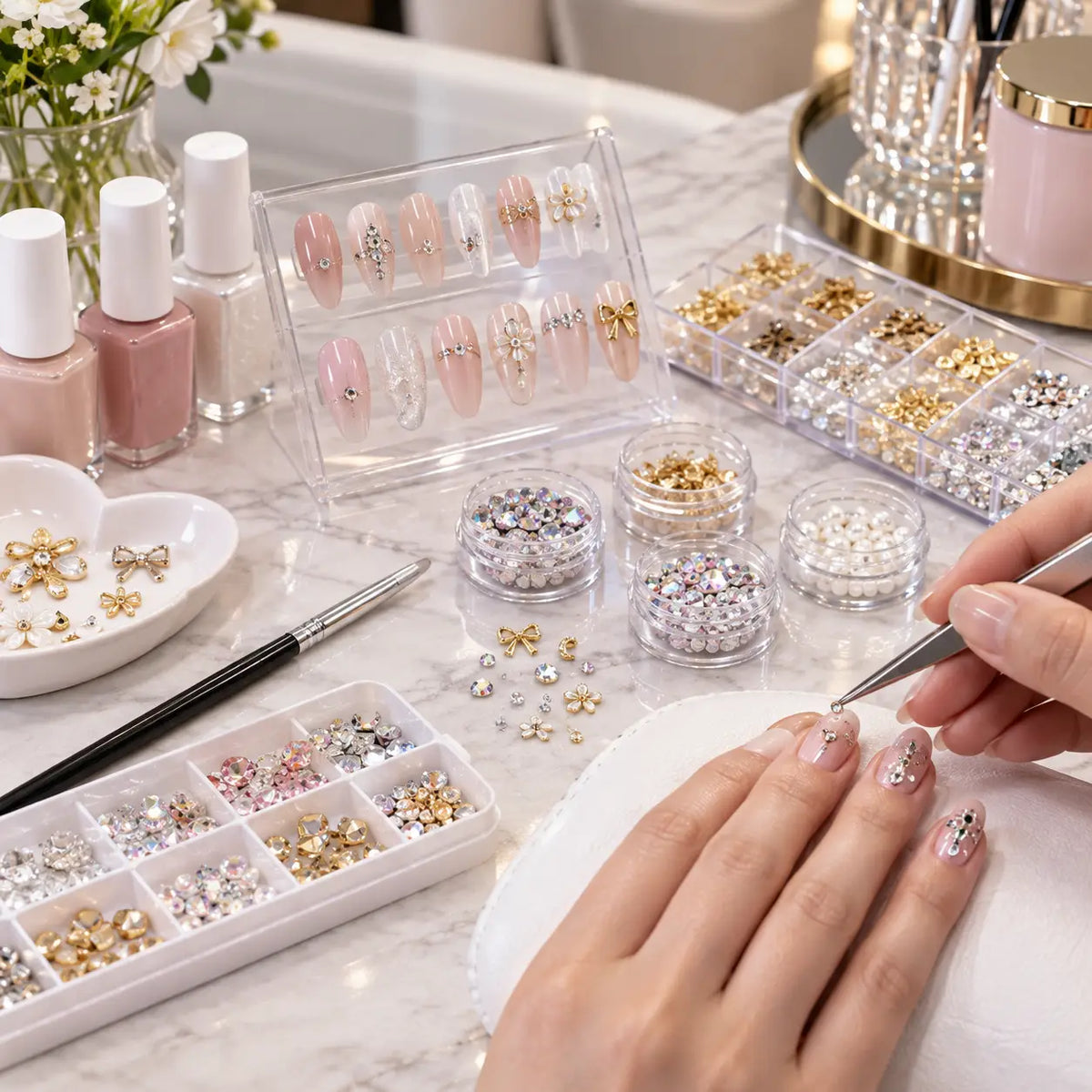
In a competitive nail industry, offering beautiful manicures is only part of building a successful salon business. Clients are increasingly interested in personalized designs, distinctive finishes, and small details that make their nails feel unique. For salon owners, these preferences create an opportunity to expand service menus and increase the value of individual appointments.
Professional nail art charms and embellishments can turn a simple manicure into a customized, premium service. From sparkling crystals and metallic accents to decorative charms and dimensional details, these small additions give nail technicians more creative options while helping salons introduce attractive upgrades for clients.
Turn a Basic Manicure Into a Premium Experience
A simple manicure can serve as the foundation for a wide range of creative upgrades. Adding a few carefully selected embellishments can transform an understated look into something more eye-catching without requiring an entirely different service.
For example, a client who initially requests a neutral manicure might choose a subtle crystal accent, while another may prefer metallic details or decorative charms for a more expressive look.
These additions give clients greater control over their final design and allow technicians to offer different service levels based on complexity, materials, and application time.
Rather than treating every embellishment as an informal extra, salons can develop clearly defined upgrades that help clients understand the additional value they receive.
Create Add-On Options Clients Can Easily Understand
One effective way to sell nail art embellishments is to make the available choices simple and visually appealing.
Clients may hesitate when they cannot picture how an upgrade will look or understand how it affects the price. A structured add-on menu helps remove that uncertainty.
Consider organizing embellishment services into categories such as:
-
Subtle accents: A small crystal, metallic detail, or single decorative charm.
-
Coordinated accents: Matching embellishments on several nails for a balanced design.
-
Statement nails: More elaborate decorations concentrated on one or two feature nails.
-
Full decorative sets: Multiple embellishments arranged across the nails as part of a more intricate design.
Each category can have its own pricing based on material costs, application time, and technical difficulty.
This approach gives clients options at different price points while helping technicians explain the difference between a standard manicure and a more detailed service.
Increase Perceived Value Through Personalization
Clients often appreciate services that reflect their individual style. Nail charms and embellishments make personalization easier because they introduce additional shapes, textures, finishes, and decorative themes.
A minimalist client may prefer a single metallic accent, while someone preparing for a celebration might choose sparkling crystals or more prominent decorative charms. Seasonal events, weddings, birthdays, holidays, and special occasions can also inspire customized designs.
Technicians can recommend embellishments that complement a client's preferred look rather than simply suggesting the most elaborate option.
The key is to make recommendations that feel relevant. When clients can see how a small design detail improves the overall manicure, they may be more interested in upgrading their service.
Make Design Samples Work Harder for Your Salon
Visual examples are particularly useful when selling creative services. Clients may understand the idea of nail embellishments but still find it difficult to imagine the finished result.
A collection of sample designs can help bridge that gap.
Salons can display completed nail tips, sample boards, or photographs featuring different embellishment styles. Organizing these examples by design type or price range makes it easier for clients to compare options.
For instance, a salon might showcase a simple crystal accent beside a coordinated metallic design and a more elaborate charm arrangement. The examples help communicate the difference in appearance and complexity.
Technicians can also photograph suitable completed designs for the salon's social media pages, website, or service menu. Clear, well-lit images make small decorative details easier to appreciate and can encourage clients to ask about similar looks.
Protect Profit Margins With Smart Pricing
Premium-looking nail art can create an opportunity for higher-value appointments, but additional revenue does not automatically mean additional profit. Embellishments have material costs, and intricate designs may require considerable application time.
Salon owners should account for both when setting prices.
A practical pricing strategy considers:
-
Material cost: The cost of charms, crystals, adhesives, and other products used in the design.
-
Application time: The additional technician time required to position and secure each embellishment.
-
Design complexity: The skill and precision needed to create the intended result.
-
Service durability: Whether the selected materials and application method are suitable for the intended service.
-
Removal or correction requirements: The additional time or materials that may be needed if the design requires adjustment.
For example, adding several small crystals may involve a modest material cost but still require extra time for precise placement and secure application. Pricing should reflect the complete service rather than the cost of the decorative pieces alone.
Tracking which upgrades clients choose most frequently can also help salons refine their menus and focus on options that balance customer appeal with operational efficiency.
Choose Professional Embellishments for Better Application
The quality and suitability of decorative materials can influence both the appearance and practicality of a finished design. Nail technicians should select embellishments appropriate for their intended application methods and the nail service being performed.
When choosing nail art charms and decorative accessories, consider the following factors:
Size and proportion: Select embellishments that complement the nail shape and available surface area without overwhelming the design.
Design variety: A useful selection of shapes, sizes, and finishes makes it easier to offer different styles and price levels.
Application compatibility: Check that the embellishments work with the intended attachment product and application technique.
Comfort and practicality: Consider how raised or oversized decorations may affect everyday wear, particularly for clients who prefer understated or low-profile designs.
Secure application: Follow product instructions and professional practices to help ensure embellishments are attached appropriately and the finished design remains suitable for its intended use.
Keeping frequently used embellishments organized by type, size, or finish can also make it easier for technicians to locate suitable pieces during appointments.
Train Technicians to Recommend Upgrades Naturally
Successful upselling should feel like helpful consultation, not pressure. Technicians can introduce embellishment options by asking about the client's preferences, occasion, and desired level of detail.
For example, after discussing the base manicure, a technician might ask whether the client would like to see a few options for adding a subtle crystal accent or a more decorative feature nail.
Showing two or three relevant samples is often more useful than presenting an overwhelming number of choices. It gives clients a clear starting point and allows them to decide whether an upgrade suits their taste and budget.
Technicians should also explain any additional costs before beginning the design. Transparent pricing builds trust and helps clients feel comfortable making informed decisions.
Over time, a consistent consultation process can help the salon present creative upgrades as a natural part of its service offering.
Build a More Profitable Nail Art Menu
Nail embellishments can support more than individual add-on sales. They can also help salons create distinctive service packages that appeal to different customer groups.
A salon might offer a classic manicure with optional accents, a special-occasion design package, or a premium nail art service featuring more intricate decorative work.
These options give clients a clearer understanding of the salon's offerings and provide technicians with a structured way to discuss pricing.
Salon owners can review booking data and sales records to identify which designs generate the most interest, which upgrades are most profitable, and which products deserve a larger share of the inventory budget.
This information makes it easier to adjust the service menu based on actual demand instead of relying entirely on trends or assumptions.
Final Thoughts: Small Embellishments Can Create Valuable Opportunities
Professional nail art charms and embellishments offer salons a practical way to expand creative possibilities while introducing higher-value service options. With the right selection of decorative materials, appealing design samples, transparent pricing, and thoughtful client consultations, even a small accent can become an opportunity to personalize a manicure.
The most effective strategy is to combine creativity with sound business planning. Choose embellishments that suit your clients, price upgrades according to their true cost, and train technicians to recommend options that genuinely improve the desired look.
Explore professional nail art charms, crystals, and embellishments at Lee Nail Supply to discover decorative supplies that can help your salon develop more creative service options and give clients additional ways to express their personal style.