 Gel Polish
 Nail Lacquer
 Acrylic
 Nail Tools
 LED Lamps
 Pedicure Chairs
 Nail Art
 Furniture
The Brush That Turns Simple Nails Into Art: What Makes a Good Nail Art Striping Brush So Useful
August 12, 2026
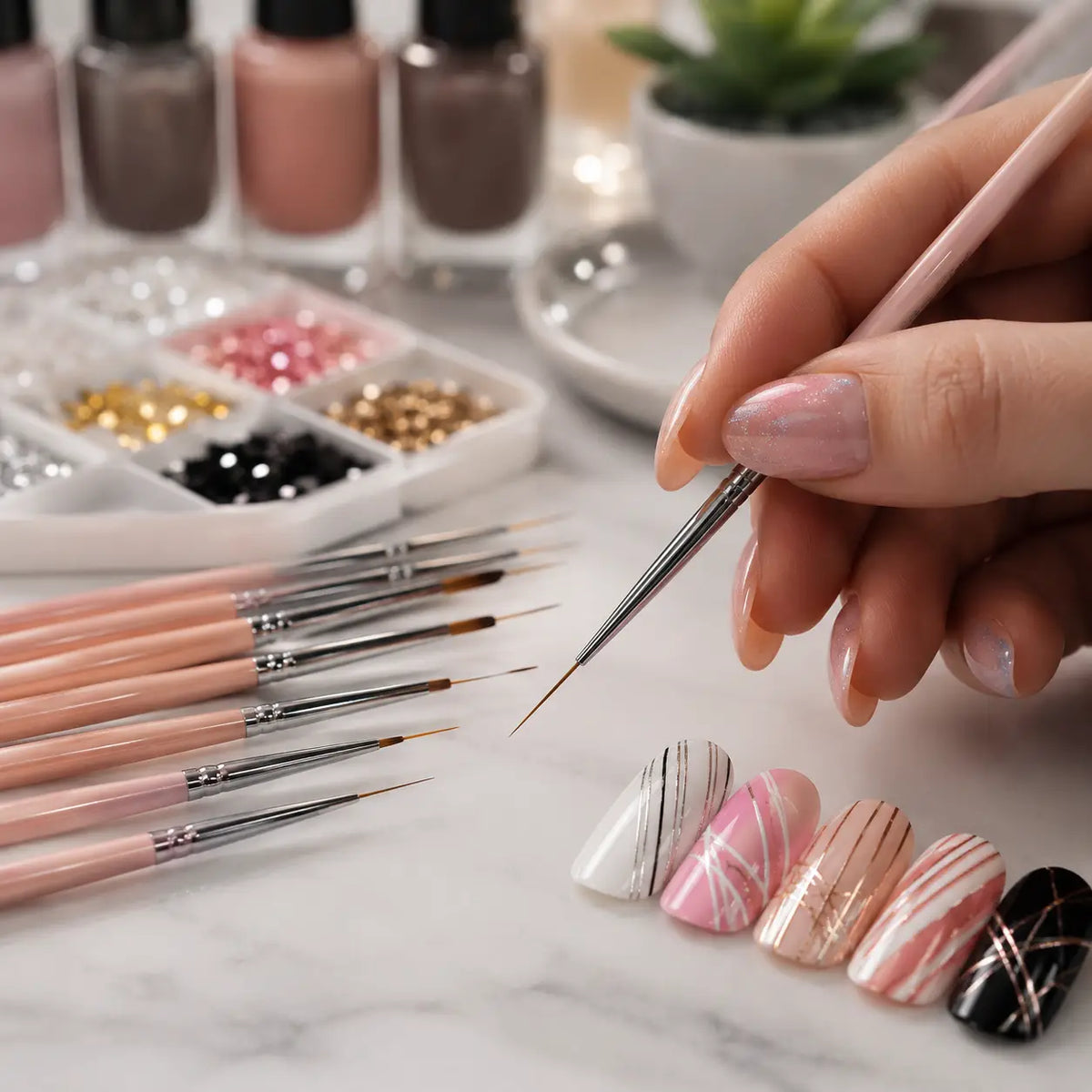
A beautiful nail design doesn't always require dozens of products.
Sometimes, all it takes is a good brush and a little creativity.
A nail art striping brush may look like one of the simplest tools on the nail table, but it can open the door to an impressive range of designs. With its fine, elongated bristles, a striping brush gives technicians the control needed to create lines, curves, swirls, geometric patterns, French details, and other intricate artwork.
It's a small tool with a surprisingly big creative role.
Why Lines Matter So Much in Nail Art
Lines are everywhere in nail design.
They can be bold or delicate, straight or curved, minimal or highly detailed. They can divide colors, create geometric shapes, outline designs, or become the design themselves.
The challenge is getting those lines exactly where you want them.
A regular nail-art brush may not provide the same reach or control. A dedicated striping brush is designed specifically for this type of precision work, making it much easier to experiment with fine-line designs.
The Long Bristles Make a Difference
One of the defining characteristics of a striping brush is its long, narrow bristle arrangement.
That length allows the brush to carry enough product to create a continuous line instead of forcing the technician to repeatedly reload the brush.
The result can be smoother and more consistent lines when the brush is properly loaded and controlled.
Different striping brushes can vary in bristle length and thickness, so the choice of brush can depend on the type of design being created.
From Simple Stripes to Intricate Designs
The name "striping brush" might make it sound like the tool is only useful for stripes.
It's much more versatile than that.
A technician can use a striping brush for:
- Fine straight lines
- Curved lines and swirls
- Geometric patterns
- French-tip details
- Plaid and grid designs
- Floral stems
- Abstract patterns
- Decorative outlines
- Fine accent details
The same basic tool can therefore contribute to both minimalist and highly detailed nail designs.
A Simple Nail Can Become Something Completely Different
Imagine a manicure with a single solid color.
It already looks polished.
Now add a few delicate lines.
Suddenly, the same color can look modern, artistic, geometric, or completely customized.
That's one of the most useful characteristics of a striping brush. It doesn't necessarily require the technician to change the entire manicure. Instead, it can add another layer of creativity to what is already there.
A few carefully placed strokes can completely change the personality of a set of nails.
Precision Is More Important Than Size
A striping brush is small, but its value comes from control rather than size.
The technician needs to manage the amount of product on the brush, maintain consistent pressure, and guide the brush smoothly across the nail.
That makes the tool especially useful for designs where precision matters.
The brush provides the opportunity, but technique creates the final result.
Brush Quality Matters
Not every striping brush will feel the same in the hand.
Bristle length, thickness, flexibility, and material can all influence how a brush behaves during application.
A brush that's too stiff may not create the desired flow.
One that's too thick may make delicate lines difficult.
One that's poorly shaped may make consistent detailing frustrating.
Choosing a quality brush suited to the technician's preferred techniques can make nail-art work considerably more comfortable and predictable.
The Right Amount of Product Matters Too
Even a great striping brush can be difficult to control if it's loaded incorrectly.
Too much product can create thick, uneven lines.
Too little can cause the line to break before reaching the desired length.
Technicians can experiment with how much product they load onto the brush and how the product's consistency affects the stroke.
This is where practice becomes important.
The goal isn't simply to own a striping brush.
It's to understand how the brush, product, and hand movement work together.
Control Comes With Practice
Fine nail art requires patience.
Straight lines may look easy until you try to create one perfectly across a small nail.
Curves require a different type of movement.
Long, flowing designs require consistent pressure and direction.
The more a technician works with a striping brush, the more familiar these movements become.
Over time, the brush can start to feel less like a specialized tool and more like an extension of the technician's hand.
One Brush Can Expand a Color Collection
A striping brush doesn't just create new designs.
It can also make an existing color collection more versatile.
A single base color can be transformed with contrasting lines, layered patterns, borders, swirls, or decorative details.
That means technicians don't necessarily need a completely new collection of colors to create something different.
Sometimes they simply need another way to use the colors they already have.
Great for Customization
Clients often want something that feels personal.
A striping brush can help technicians move beyond standard color application and create customized artwork based on a client's preferences.
A few lines can represent a favorite style.
A geometric pattern can complement an outfit.
A subtle accent can make a neutral manicure feel unique.
The possibilities are limited largely by the technician's imagination and technique.
Why It Deserves a Place on the Nail Table
Professional nail stations contain many specialized tools, but the most useful ones are often those that can perform several different jobs.
A striping brush fits that description perfectly.
It takes up very little space, but it can support countless design ideas.
Whether a technician specializes in minimalist nail art or elaborate custom sets, having a reliable precision brush available can make creative work easier to approach.
Final Thoughts
The beauty of a nail art striping brush is its simplicity.
It doesn't need complicated technology.
It doesn't need to take up much space.
It simply gives the technician more control over one of the most important elements of nail art: the line.
With the right brush and enough practice, a simple manicure can become a detailed work of art.
And that's what makes the striping brush such a valuable tool.
Sometimes the difference between a plain nail and a memorable design is just one precise line.