 Gel Polish
 Nail Lacquer
 Acrylic
 Nail Tools
 LED Lamps
 Pedicure Chairs
 Nail Art
 Furniture
The Liquid Behind Stronger Nail Extensions: Why Monomer Matters in Professional Acrylic Work
August 21, 2026
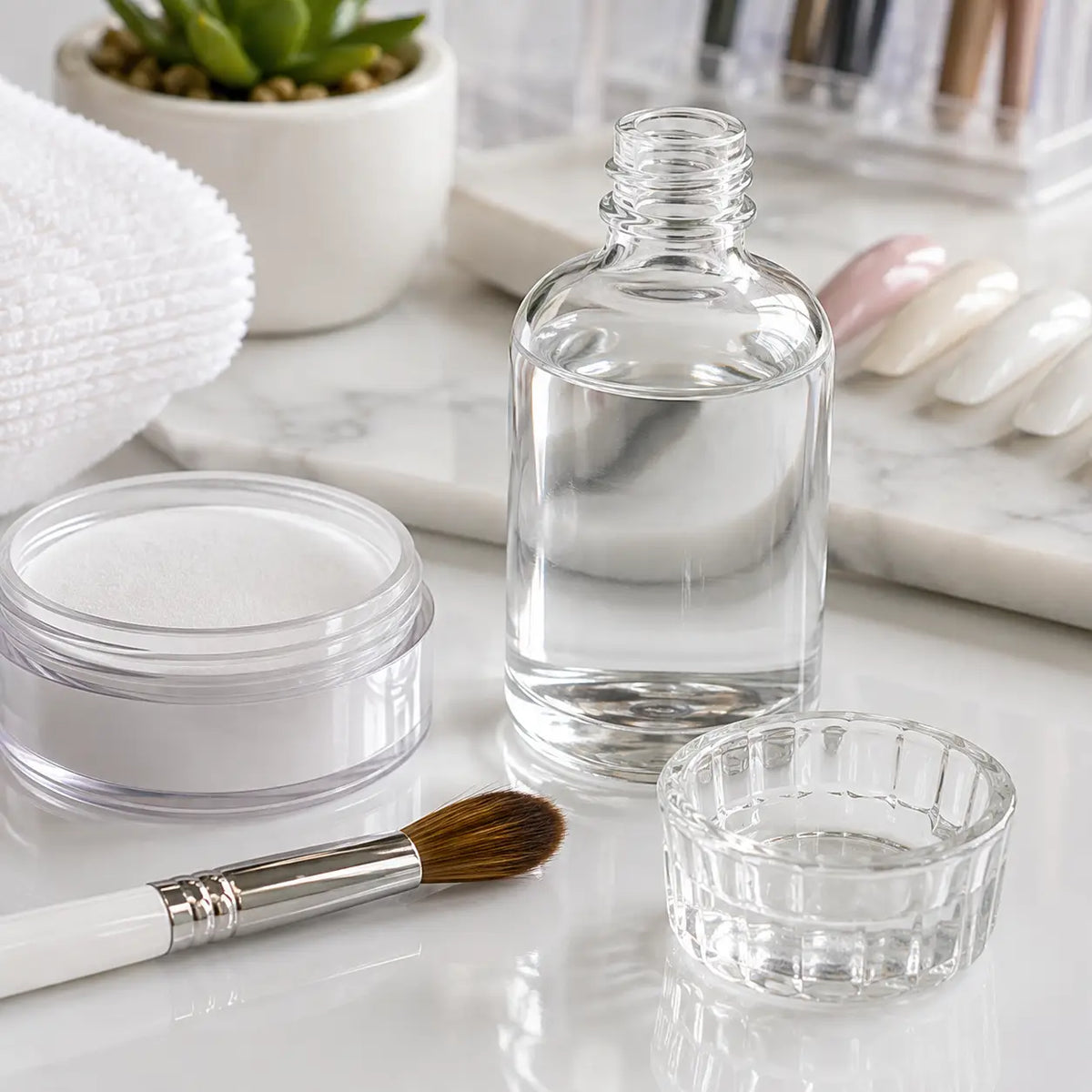
When clients look at a beautiful set of acrylic nail extensions, they usually notice the finished shape, length, color, and shine.
What they don't see is the liquid that helped make the enhancement possible.
Liquid monomer is one of the most important components in traditional acrylic nail systems. When combined with acrylic powder, it creates the workable material that nail technicians use to build, shape, and sculpt enhancements.
It's easy to focus on the powder when choosing acrylic supplies, but the monomer deserves just as much attention.
What Is Liquid Monomer?
Liquid monomer is the liquid component used with acrylic powder in a professional acrylic enhancement system.
When the technician picks up a bead by combining monomer and powder, the mixture begins changing from a liquid-and-powder combination into a workable acrylic material.
This allows the technician to place the product onto the nail and sculpt it into the desired shape before it hardens.
In simple terms, the monomer helps turn acrylic powder into something a technician can actually work with.
Why the Liquid Matters
Acrylic powder gets much of the attention because it determines important characteristics such as color and appearance.
But the monomer influences the application experience.
The interaction between the liquid and powder affects how the bead forms, how it moves, and how easily the technician can manipulate it.
That means two acrylic systems that look similar in their containers can behave differently during application.
For professional technicians, that difference matters.
The Right Bead Makes the Job Easier
Anyone experienced with acrylic knows that bead consistency can make or break the application process.
A bead that's too wet can be difficult to control.
A bead that's too dry can become harder to manipulate smoothly.
The ideal consistency depends on the system, technique, and manufacturer's recommendations.
A quality monomer paired with the appropriate acrylic powder can help the technician achieve a predictable working consistency.
And when the bead behaves properly, sculpting becomes much more controlled.
Better Control During Sculpting
Acrylic nail enhancements require precision.
Technicians need to create the correct structure, shape, thickness, and surface while the product is still workable.
This is where monomer becomes especially important.
A well-performing acrylic system gives the technician enough working time to position and shape the material without fighting against it.
That control can be particularly valuable when creating longer extensions, structured enhancements, or detailed shapes.
Consistency Matters From Nail to Nail
Professional nail services aren't usually about creating one perfect nail.
Technicians may need to create ten nails that look balanced and consistent with one another.
That requires predictable product behavior.
If the acrylic behaves differently from one bead to another, maintaining consistent application becomes more difficult.
A reliable monomer can contribute to a more predictable acrylic system when used with the appropriate powder and technique.
Consistency isn't flashy, but it's one of the things that separates a professional workflow from a frustrating one.
Monomer and Powder Work as a Team
It's important to remember that monomer doesn't work independently.
It is part of an acrylic system.
The monomer and powder are designed to work together, and the proportions and application method can affect the resulting bead.
That's why randomly mixing products from different systems isn't always the best approach.
Following the manufacturer's recommendations for the specific acrylic system can help technicians get the intended performance from the products.
Workability Is a Major Selling Point
For a busy nail technician, product workability is extremely important.
Acrylic should be manageable enough to place, shape, and refine without creating unnecessary difficulty.
When the product responds predictably to the brush, the technician can spend more time concentrating on the actual design and structure rather than constantly correcting the material.
That's one reason professional technicians can be particular about their monomer.
They aren't simply buying a liquid.
They're choosing how their acrylic system behaves at the nail table.
A Good Monomer Can Support Efficiency
Time matters in a professional salon.
Technicians need products that allow them to work efficiently while maintaining quality.
When an acrylic system has predictable bead formation and workable consistency, the application process can become smoother.
That can help reduce unnecessary manipulation and make each step of the enhancement easier to manage.
The result is a product that supports both the technician's technique and the salon's workflow.
The Finished Enhancement Starts With Application
Acrylic durability depends on many factors, including proper preparation, correct product ratios, application technique, structure, curing or polymerization, and aftercare.
Monomer alone doesn't determine how strong an enhancement will be.
However, it plays an important role in the acrylic system that creates the enhancement.
That's why selecting a monomer should be viewed as part of selecting the entire acrylic system rather than simply choosing an inexpensive liquid.
Why Professional-Grade Products Matter
Not all monomers are intended for the same application.
Professional nail products are formulated for use within specific acrylic systems and professional application procedures.
Technicians should look for products from reputable suppliers, follow usage instructions, and pay attention to compatibility with their acrylic powder.
A good product should provide predictable behavior while fitting naturally into the technician's established technique.
The Liquid Most Clients Never Think About
Clients rarely ask about monomer.
They usually ask about the color.
They choose the length.
They select the shape.
They admire the finished result.
But behind that result is a carefully controlled process involving preparation, powder, liquid, brush technique, sculpting, filing, and finishing.
Monomer is one of those behind-the-scenes products that clients may never notice—but technicians certainly do.
Choosing Monomer Is Choosing Workability
When a salon invests in acrylic supplies, it's tempting to focus primarily on the powder collection.
After all, that's where the colors and visual effects are.
But the liquid component deserves equal consideration.
A monomer that works well with the chosen acrylic powder can provide the consistency and control technicians need to create professional enhancements efficiently.
In other words, the right monomer isn't simply something that makes acrylic possible.
It can make acrylic easier to work with.
Final Thoughts
Liquid monomer may look like a simple bottle of clear liquid sitting quietly beside the acrylic powder.
In reality, it plays a central role in the sculpting process.
It helps transform acrylic powder into a workable material, influences bead consistency and workability, and supports the technician's ability to shape and structure nail enhancements.
For salons and nail professionals, choosing a quality monomer isn't just about buying another supply.
It's about choosing an acrylic system that provides the control and consistency needed at the nail table.
Because when it comes to professional acrylic work, the liquid behind the enhancement can be just as important as the powder everyone sees.