 Gel Polish
 Nail Lacquer
 Acrylic
 Nail Tools
 LED Lamps
 Pedicure Chairs
 Nail Art
 Furniture
The Pedicure Stool: The Unsung Seat That Does More Work Than You Think
August 20, 2026
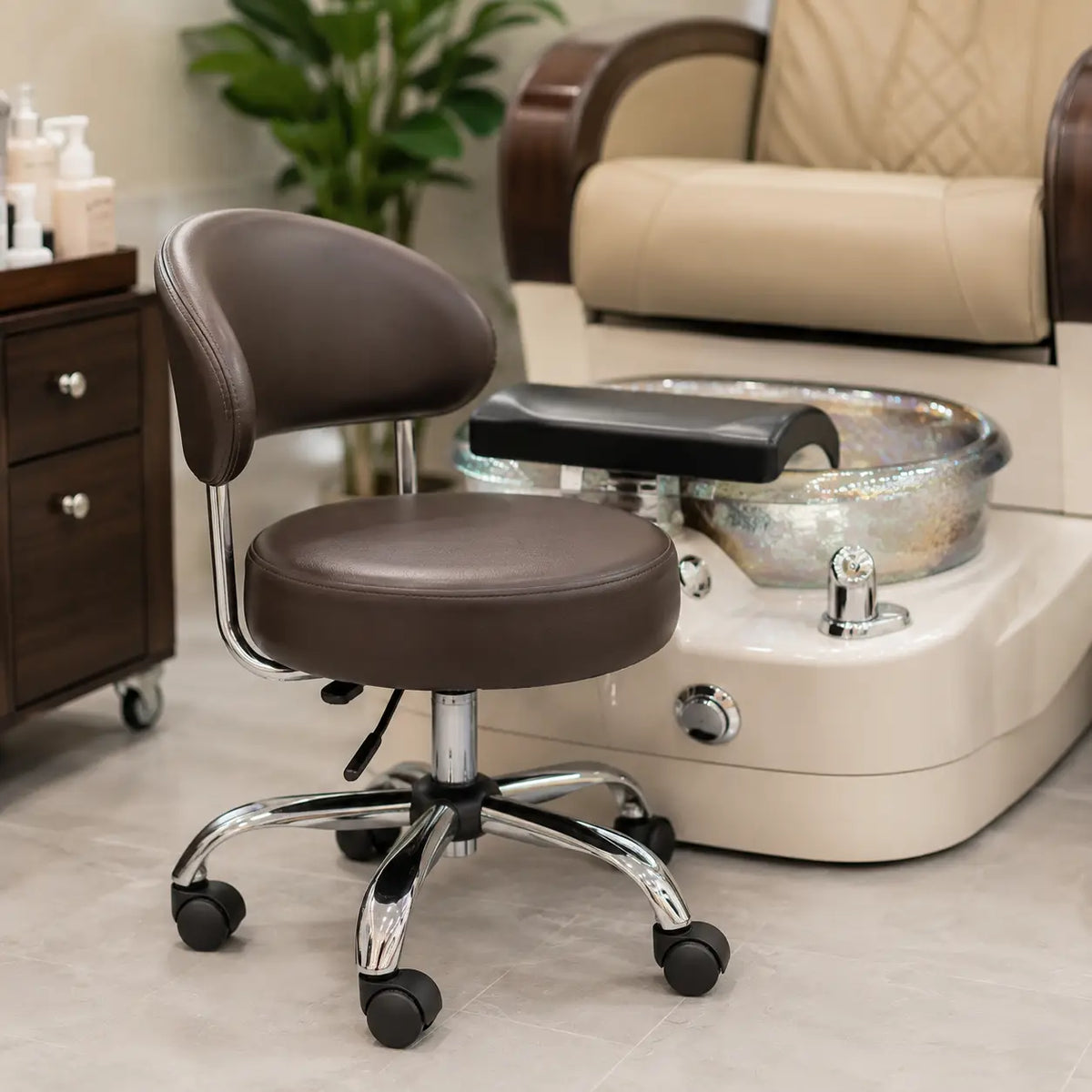
Walk into a nail salon and ask someone to name an important piece of pedicure furniture.
Most people will probably say the pedicure chair.
Fair enough.
It is big, comfortable, impressive, and usually the first thing clients notice.
But sitting quietly nearby is another piece of furniture that deserves considerably more credit: the pedicure stool.
It doesn't have a massage function. It doesn't offer a foot bath. It doesn't recline.
It just sits there.
And somehow, it does a tremendous amount of work.
The Seat Behind the Service
During a pedicure, the technician isn't simply sitting in one position and painting toenails.
They're constantly moving.
Forward.
Backward.
Sideways.
Closer to the client's feet.
Then slightly farther away.
Then back again.
The pedicure stool is essentially the technician's mobile command center.
It needs to allow enough movement for the technician to reach different areas comfortably without constantly standing up and sitting back down.
That's a lot to ask from something that looks like a very ordinary chair.
It Moves More Than You Think
A typical pedicure can involve dozens of small movements.
The technician may roll toward the client's feet to work on one side, move back to reach supplies, shift position for the other foot, and move forward again for detailed work.
Do that several times per appointment.
Now multiply it by an entire day.
Suddenly, the humble stool has probably traveled farther than some people do before lunch.
Its wheels, base, and frame aren't just decorative features.
They're doing their jobs all day long.
Height Is More Important Than It Looks
Here's something clients may never think about: the technician's height relative to the client's feet can affect how comfortably they work.
If the stool is too low, the technician may have to lean forward more than necessary.
If it's too high, maintaining a comfortable working position can become difficult.
A properly sized or adjustable stool gives the technician more flexibility to find a comfortable working height.
And after several hours of pedicures, that small adjustment can feel like a very big deal.
The Stool Has a Tough Job
A salon stool may not look like heavy-duty equipment.
But consider what it experiences every day.
Constant sitting.
Constant rolling.
Repeated height adjustments.
Frequent movement across salon floors.
Multiple technicians using the same type of seating.
That's a surprisingly demanding environment.
A stool that looks perfectly fine in a showroom still needs to prove itself during the reality of daily salon work.
The Wheels Are the Real MVPs
If a pedicure stool has casters, those little wheels deserve some appreciation.
They allow the technician to move without constantly getting up.
That might sound like a minor convenience, but during a busy day, it can make a significant difference.
Smooth movement means fewer interruptions.
The technician can adjust their position quickly and stay focused on the service.
Of course, wheels that roll too freely can be annoying too.
Nobody wants their stool suddenly deciding that it has somewhere else to be.
Good mobility should mean controlled mobility.
Comfort Matters More After Appointment Number Four
A stool can feel perfectly comfortable for ten minutes.
The real test comes later.
Try sitting on it through several appointments.
Then several more.
Suddenly, features that seemed unimportant start to matter.
Seat padding.
Back support.
Height.
Stability.
Foot placement.
Adjustability.
A technician may spend a large portion of the working day on that stool, so comfort isn't simply a luxury.
It's part of the working environment.
The Pedicure Stool Doesn't Get Much Attention
This is probably the funniest part.
Clients notice the pedicure chair.
They notice the beautiful polish colors.
They notice the foot bath.
They notice the relaxing atmosphere.
Almost nobody walks into a salon and says:
"Wow, that's an excellent technician stool."
And that's perfectly understandable.
The stool isn't supposed to be the star of the show.
Its job is to quietly support the person providing the service.
In other words, it's doing important work while receiving absolutely no applause.
A Good Stool Can Make a Technician's Day Easier
When salon furniture works properly, technicians don't have to think about it.
They sit down.
They adjust the height.
They roll into position.
They work.
They move again.
Everything happens naturally.
But when the stool doesn't work properly, it suddenly becomes impossible to ignore.
A stubborn wheel.
A seat that won't stay at the right height.
Uncomfortable padding.
Too little stability.
Suddenly, the technician has another problem to solve.
That's why good furniture is often noticed most when it's missing.
It's About More Than Sitting
Calling it a "stool" makes it sound like its only purpose is providing somewhere to sit.
In reality, a professional pedicure stool supports the technician's entire working position.
It needs to accommodate movement, provide stability, allow appropriate positioning, and remain comfortable throughout repeated services.
The better the stool supports those tasks, the less attention the technician needs to give it.
And that's exactly what good salon furniture should do.
The Daily Workout Nobody Asked For
There is also something amusing about the amount of movement a technician's stool can experience in one day.
Roll forward.
Roll backward.
Turn.
Adjust.
Repeat.
By the end of the day, the stool may have completed its own unofficial fitness program.
Meanwhile, the technician is doing detailed work with incredible concentration.
The stool doesn't complain.
It just keeps rolling.
Choosing One Isn't Just About Looks
A stylish stool can certainly look great in a salon.
But appearance should only be part of the decision.
For a professional pedicure environment, practical features deserve attention too.
Consider:
- Comfortable seating
- Appropriate height
- Easy adjustment
- Smooth but controlled movement
- Stable construction
- Durable wheels and base
- Materials that are practical for salon use
- A design that fits comfortably within the workstation
The goal isn't simply to find a stool that looks good.
It's to find one that can handle the reality of everyday salon work.
The Unsung Seat of the Pedicure Area
The pedicure chair might get the spotlight, but the stool is right there for every appointment.
It supports the technician.
It follows every movement.
It makes reaching different areas easier.
It helps maintain a comfortable working position.
And it does all of this without asking for much attention.
That's what makes it such an interesting piece of salon furniture.
It may be one of the least glamorous items in the room, but it can have a surprisingly important role in the quality of the working environment.
Final Thoughts
The pedicure stool probably isn't going to be the reason someone books a salon appointment.
Nobody is likely to walk past a salon window and say, "I have to try that place—the stools look incredible."
But once a technician spends hours working on their feet—or rather, sitting beside them—the importance of that stool becomes much easier to appreciate.
It's a small piece of furniture with a big daily workload.
It rolls.
It adjusts.
It supports.
It survives.
And then it does the same thing tomorrow.
The pedicure chair may be the star of the room, but the pedicure stool is the quiet coworker that never gets the credit.