 Gel Polish
 Nail Lacquer
 Acrylic
 Nail Tools
 LED Lamps
 Pedicure Chairs
 Nail Art
 Furniture
The Professional Edge of Nail Sculpting Brushes: How the Right Brush Shapes Cleaner, More Refined Enhancements
October 21, 2026
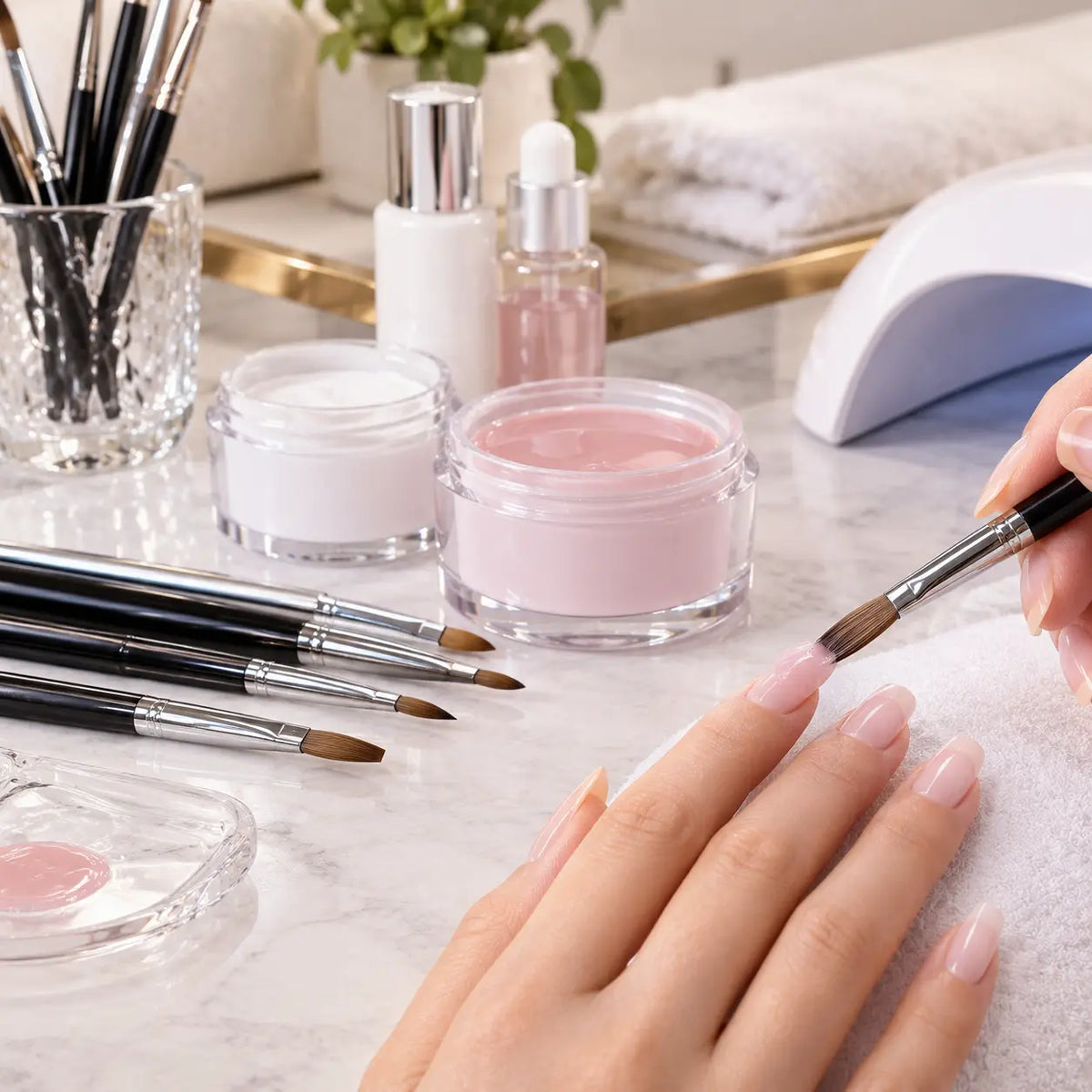
Creating beautiful nail enhancements takes more than quality acrylic or gel products. The way those products are handled, distributed, and shaped during application has a major influence on the finished result. For professional nail technicians, having the right sculpting brush can make detailed application more manageable and help achieve cleaner, more refined enhancements.
Professional nail sculpting brushes are designed to give technicians greater control when working with compatible enhancement systems. From placing product precisely to refining the structure of an extension, the right brush supports the techniques that turn basic application into polished professional work.
Choosing quality sculpting brushes is an investment in precision, consistency, and the overall quality of salon services.
Better Product Control Starts With the Right Brush
A sculpting brush is one of the technician's most important application tools. Its shape, size, and bristle characteristics influence how product can be picked up, moved, and distributed across the nail.
When a brush is appropriate for the product and technique, technicians can work with greater control instead of struggling to position material where it is needed.
For acrylic application, a suitable brush helps technicians pick up and place product beads before shaping them into the desired structure. With compatible gel systems, the brush helps distribute product and refine its placement while maintaining control around the nail's contours.
The goal is not simply to move product from one area to another. It is to build a balanced enhancement with an even surface and a refined outline.
Create Cleaner Application Around the Nail
Product placement is especially important around the cuticle area and sidewalls. Excess material in these areas can create an untidy appearance and may contribute to lifting or other application problems if the enhancement is not properly constructed.
A suitable sculpting brush allows technicians to guide product carefully and maintain better control near the edges of the nail.
The brush should complement the consistency of the enhancement product. A brush that is too large, too small, or unsuitable for the technique may make detailed work more difficult.
With the right combination of brush selection and application technique, technicians can work toward smoother transitions, cleaner edges, and more professional-looking enhancements.
Match Brush Shapes to Different Sculpting Techniques
Not every sculpting brush is designed for the same purpose. Different shapes and sizes can support different application preferences and levels of detail.
When selecting a professional brush, consider how its design fits the work being performed.
-
Oval brushes: Commonly used for controlled product placement and shaping, depending on the brush design and enhancement system.
-
Round brushes: Can support product pickup and application techniques that require a rounded brush profile.
-
Flat brushes: Offer a broader working surface for distributing and smoothing compatible gel products.
-
Detail brushes: Help with smaller areas that require more precise product movement and finishing.
A salon that offers several types of nail enhancements may benefit from maintaining a selection of brushes suited to its most frequently performed techniques.
Rather than purchasing every available brush shape, technicians should prioritize tools that match their products, training, and service requirements.
Improve Structure and Surface Refinement
A professional-looking enhancement needs more than an attractive shape. Its structure must also be carefully developed.
The apex, sidewalls, free edge, and overall thickness all contribute to the finished nail's appearance and balance. During application, a sculpting brush helps technicians distribute product and refine the structure before filing and finishing.
With acrylic systems, controlled bead placement and shaping help establish the enhancement's structure. With suitable gel systems, brush movements can help distribute the product and create a balanced surface.
A brush that responds well to the technician's movements makes it easier to work through these steps with greater consistency.
Although filing remains an important part of finishing many enhancements, good product control during application can help reduce unnecessary corrections later.
Choose Bristles That Suit Your Enhancement Products
Brush bristles play an important role in how a tool feels and performs. Their material, flexibility, shape retention, and construction can influence product handling.
Natural-hair and synthetic brushes may have different characteristics, and neither is automatically the right choice for every application. The most suitable option depends on the product system, manufacturer recommendations, and the technician's preferred technique.
Before purchasing a sculpting brush, consider:
Bristle quality: Look for bristles that maintain their intended shape and do not easily shed during normal use.
Flexibility: The brush should provide a suitable balance of movement and control for the application technique.
Shape retention: A well-maintained brush should return to its intended shape after cleaning and proper storage.
Product compatibility: Confirm that the bristle material and brush construction are suitable for the enhancement products being used.
Handle comfort: A comfortable handle can make detailed work easier during longer appointments.
Selecting a brush based on these characteristics helps technicians choose a tool that supports their actual working requirements rather than relying on appearance alone.
Proper Brush Care Protects Your Investment
Even a high-quality sculpting brush can lose its performance when it is not cleaned and stored correctly. Product buildup, hardened residue, and damaged bristles can interfere with application and make precise work more difficult.
Regular maintenance helps preserve the brush's condition and supports consistent results.
Professional brush care should include:
-
Use the appropriate cleaning method. Follow the brush manufacturer's instructions and use a cleaner compatible with the bristle material and enhancement system.
-
Remove product residue carefully. Avoid allowing acrylic or gel to harden inside the bristles.
-
Reshape the brush after cleaning. Gently restore its intended profile without pulling or damaging the bristles.
-
Store it properly. Keep brushes protected from dust, direct sunlight, and unnecessary pressure on the bristles.
-
Avoid unsuitable solvents. Certain cleaning products can damage brush materials or affect their shape.
Technicians should also use separate brushes when required by different product systems. This helps prevent unwanted contamination and keeps application tools suitable for their intended purpose.
Make Every Appointment More Efficient
In a busy salon, small improvements in application technique can make a difference throughout the working day.
When technicians are comfortable with their brushes, they can spend less time correcting product placement and more time refining the enhancement. Familiar tools also make it easier to repeat established techniques across multiple appointments.
A suitable brush selection can help technicians:
-
Apply enhancement products with greater control.
-
Reduce unnecessary product movement and cleanup.
-
Refine nail contours more efficiently.
-
Maintain more consistent application habits.
-
Work comfortably through detailed sculpting steps.
These advantages depend on proper training and product compatibility, but the right tools can make professional techniques more manageable.
Build a Professional Brush Collection Around Your Services
Salons do not necessarily need a large collection of brushes to perform quality enhancement services. A carefully selected group of dependable tools is often more useful than purchasing brushes without a clear application purpose.
Start by reviewing the salon's most common services. A technician who regularly works with acrylic may prioritize brushes designed for acrylic bead pickup and placement, while someone specializing in gel enhancements may need suitable flat or oval brushes for product distribution.
It is also worth keeping track of brush condition and replacing tools when bristles become damaged, lose their shape, or no longer perform as intended.
Pairing the right sculpting brushes with compatible enhancement products, nail forms, files, and finishing essentials creates a more complete professional setup.
Final Thoughts: Precision Is Built Into Every Application
Professional nail sculpting brushes do more than help technicians apply products. They provide the control needed to distribute material, refine contours, and develop balanced enhancements.
Choosing brushes that match the application technique and enhancement system can support cleaner product placement, smoother sculpting, and more consistent salon results. Proper cleaning and maintenance help protect that investment and keep tools ready for regular professional use.
For nail technicians who want to improve their application setup, investing in suitable sculpting brushes is a practical step toward more refined enhancement work.
Explore professional nail sculpting brushes and complementary nail enhancement supplies at Lee Nail Supply to find tools that support your techniques and help you deliver polished, professional-looking services.