 Gel Polish
 Nail Lacquer
 Acrylic
 Nail Tools
 LED Lamps
 Pedicure Chairs
 Nail Art
 Furniture
The Tiny Gap That Matters: Why Leaving the Right Space Around the Cuticle Can Make Nails Look Better
September 12, 2026
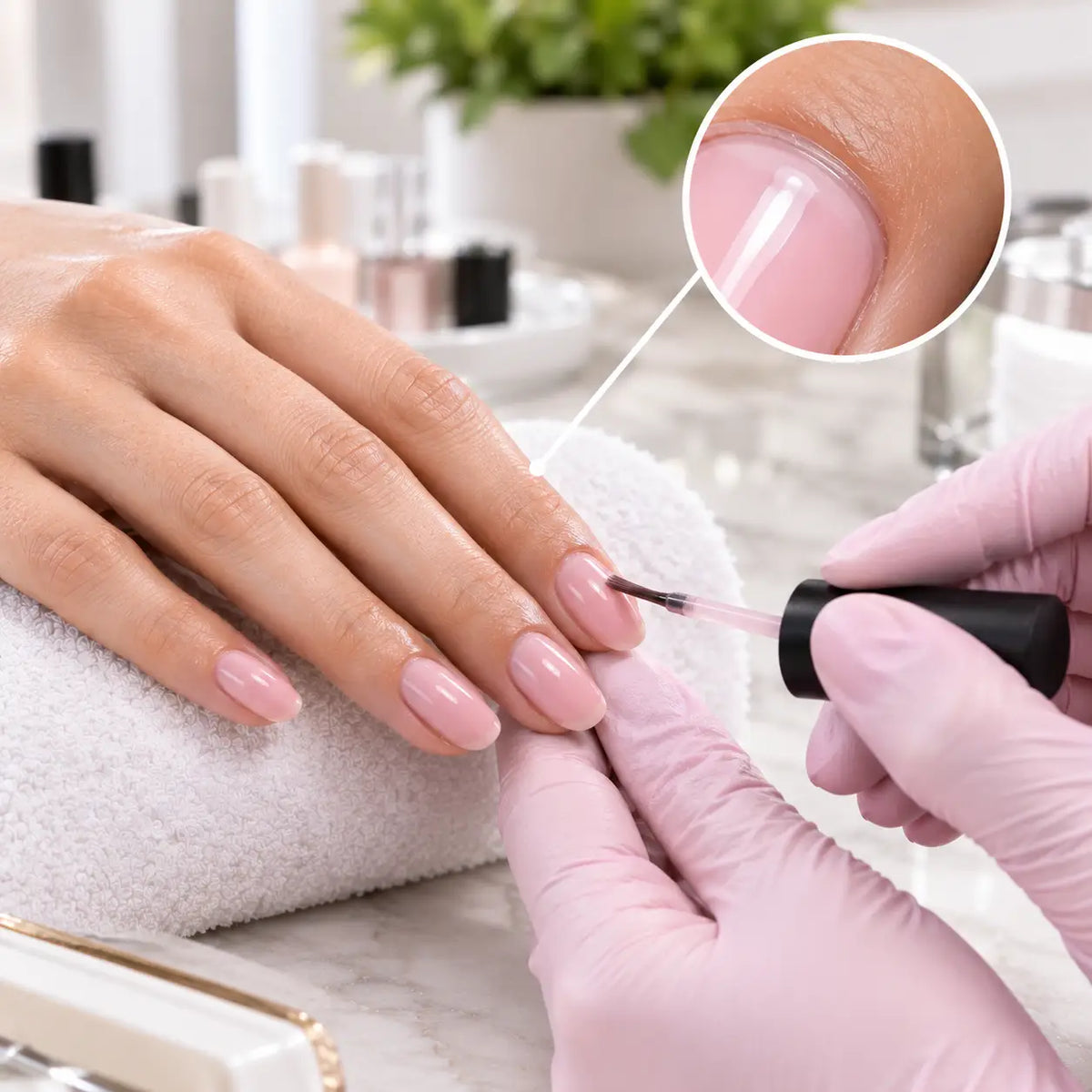
When a manicure looks exceptionally clean, the difference is sometimes only a tiny detail.
Look closely at a freshly finished set of nails and you may notice a narrow, intentional space between the product and the cuticle area. It is easy to overlook because it is not a dramatic part of the design. There is no sparkle, color change, or elaborate nail art involved.
Yet that small gap can make the entire manicure look more refined.
For nail technicians, understanding where the product should stop is just as important as knowing where it should go. A neat cuticle margin can improve the appearance of the manicure, help prevent unwanted product contact with the surrounding skin, and create the crisp finish clients associate with professional nail services.
It Is Not Really a “Gap” by Accident
The space around the cuticle is intentional.
When gel, polish, acrylic, dip powder, or another enhancement is applied, the product should not simply be pushed as close to the cuticle as physically possible. The natural nail and surrounding skin need to be considered during application.
The goal is a controlled, clean margin.
This requires precision because the nail plate does not have a perfectly straight boundary. The cuticle area curves around the nail, and every nail has its own shape. A technician needs to follow that natural contour rather than treating the entire nail as a flat surface.
That tiny margin is therefore a sign of control—not incomplete application.
Why Getting Too Close Can Change the Look
It might seem logical that bringing product right up against the cuticle would make the manicure look more complete.
In reality, the opposite can happen.
When product floods into the cuticle area or touches the surrounding skin, the result can look bulky, uneven, or messy. Once the product cures or dries, even a tiny amount outside the intended nail surface can become much more noticeable.
With gel products in particular, curing product on the surrounding skin is something technicians want to avoid. Careful application and cleanup before curing are important parts of maintaining a clean service.
A controlled margin gives the finished nail a sharper visual boundary.
The Gap Can Make the Manicure Look Cleaner
One of the biggest advantages of a neat cuticle margin is visual clarity.
Think of the cuticle area as the frame around a picture. If the frame is uneven, the entire image can appear slightly off—even when the picture itself is beautiful.
The same thing happens with nails.
A clean margin helps define:
- Where the nail enhancement begins
- Where the natural nail ends
- The shape of the manicure
- The curve of the cuticle area
- The overall symmetry of the finished nail
This becomes particularly noticeable with darker colors, highly pigmented gel products, and glossy finishes. Strong color contrast can make small application imperfections easier to see.
A precise margin gives the color room to look intentional.
It Can Also Make the Nail Look More Elegant
There is an interesting visual effect that happens when product is applied neatly around the cuticle.
The nail can appear longer and more streamlined.
Why?
Because a clean, curved margin follows the natural shape of the nail instead of creating a thick-looking border around it. When the product is evenly distributed and the cuticle area remains visually clean, the eye naturally follows the length of the nail.
This can be especially useful when creating polished, understated manicures where there is nowhere for messy application to hide.
Sometimes sophistication comes down to what you don't see.
The Shape of the Cuticle Matters
There is no single perfect cuticle curve that works for every client.
Some nails have a pronounced curve. Others are flatter. Some cuticles are more rounded, while others have sharper corners. Nail plates can also vary in width, length, and growth pattern.
That means technicians should not simply copy the same application pattern onto every nail.
Instead, the product should follow the individual nail.
This is one reason experienced technicians often appear to work incredibly close to the cuticle without actually flooding the area. Their control comes from understanding the nail's shape and adjusting the brush, product amount, and application angle accordingly.
The goal isn't to create the smallest possible gap.
The goal is to create the cleanest possible margin.
Product Control Makes a Big Difference
The size of the cuticle margin is influenced by more than brush technique.
Product consistency matters too.
If too much product is loaded onto the brush, controlling the edge becomes more difficult. Excess material can move toward the cuticle area before the technician has a chance to refine the application.
Using a controlled amount allows the technician to build the desired coverage without fighting excess product.
This is particularly important with:
- Gel polish
- Base gels
- Builder products
- Acrylic systems
- Dip systems
- Top coats
- Other enhancement products
More product does not automatically create a better-looking manicure. In many cases, precision becomes easier when the amount being handled is appropriate for the nail and the specific service.
The Brush Is Part of the Equation
A good application tool can make a surprisingly small detail much easier to control.
Brush shape, bristle flexibility, size, and product pickup all influence how close a technician can work to the cuticle area.
A brush that holds too much material may make fine application difficult. A brush with poor control can make the edge appear uneven. A well-suited brush gives the technician more ability to guide product exactly where it belongs.
For professional nail services, tools aren't just accessories sitting in a drawer.
They are part of the technique.
The right brush can turn a difficult edge into a controlled one.
Preparation Helps Create a Cleaner Margin
A precise cuticle margin doesn't begin when the polish bottle is opened.
It begins during nail preparation.
Removing unwanted residue from the nail plate, carefully addressing the cuticle area, and creating a clean working surface all help the technician see the natural nail more clearly.
When the nail surface is properly prepared, it becomes easier to determine where the product should begin and where it should stop.
Preparation also helps prevent debris or loose material from visually interfering with the finished edge.
In other words, a clean application often starts with a clean canvas.
Why This Detail Matters Even More as the Nail Grows
The cuticle margin also affects how the manicure looks as natural nail growth becomes visible.
As the nail grows, the distance between the product and the cuticle naturally increases. A properly placed starting margin can make this transition look more gradual and controlled.
If the original application is uneven, growth can make the irregularity even more obvious.
A clean initial application therefore contributes to a more polished appearance throughout the early life of the manicure.
It is another example of how a tiny detail at the beginning can influence the finished service later.
The “Almost Touching” Illusion
Here is where professional technique can be deceptive.
A beautifully applied manicure may appear as though the product is touching the cuticle.
It isn't necessarily.
The technician may have created such a smooth, narrow, and consistent margin that the eye reads the product as being right against the cuticle.
That is the difference between working close and working on the skin.
The first requires precision.
The second creates unnecessary problems.
This is why professional application isn't about getting the product as close as possible at any cost. It is about achieving the appearance of closeness while maintaining control over where the material actually sits.
Small Details Create the Professional Finish
Clients may not know the technical reason a manicure looks polished.
They may simply say:
“Your work looks so clean.”
That reaction often comes from dozens of small decisions rather than one dramatic technique.
The shape of the nail.
The amount of product.
The smoothness of the surface.
The symmetry from finger to finger.
The consistency of the color.
And, yes, that tiny space around the cuticle.
Professional nail work is full of details that are easy to miss individually but impossible to miss when they are all done correctly.
Final Thoughts
A clean cuticle margin is a small detail with a surprisingly large visual impact.
Leaving the right amount of space around the cuticle helps keep product where it belongs, creates a cleaner outline, supports a more refined appearance, and allows the natural shape of the nail to remain visible.
The trick isn't simply leaving a gap.
It is knowing how close to work, how much product to use, how to follow the natural contour, and when to stop.
That is where technique, preparation, product control, and quality tools come together.
Because sometimes the difference between an ordinary manicure and a professional-looking one isn't another layer of product.
It is knowing exactly where that layer should end.