 Gel Polish
 Nail Lacquer
 Acrylic
 Nail Tools
 LED Lamps
 Pedicure Chairs
 Nail Art
 Furniture
The Tiny Tool That Makes a Big Difference: Why the Cuticle Pusher Is Essential to Nail Prep
August 25, 2026
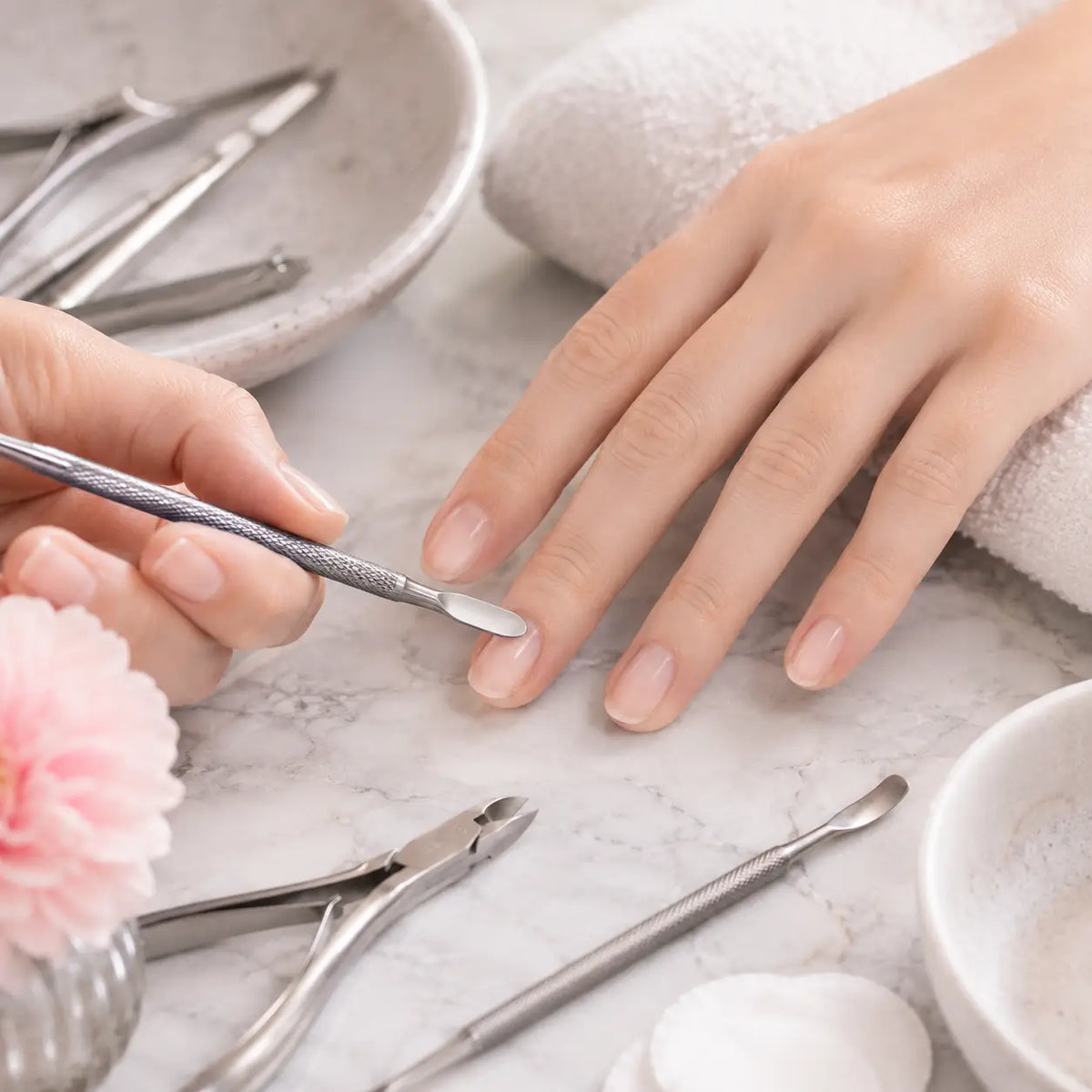
When clients sit down for a manicure, their attention usually goes straight to the exciting parts.
The color.
The shape.
The design.
The shine.
But before any of those things happen, a technician has to prepare the nail.
And one of the smallest tools on the workstation can play an important role in that process: the cuticle pusher.
It may not look impressive, but this simple instrument helps technicians prepare the nail area with the precision that professional manicures require.
What Does a Cuticle Pusher Actually Do?
A cuticle pusher is designed to help gently move back the cuticle area and assist with removing loose, non-living tissue from the nail plate during proper nail preparation.
That may sound simple.
But the area around the cuticle requires control and attention.
A technician isn't just pushing everything away from the nail.
They're carefully preparing the area while avoiding unnecessary pressure on living skin.
That's why the design of the tool matters.
The Manicure Starts Before the Polish
It's easy to think that the manicure begins when the polish bottle is opened.
In reality, preparation is one of the first major stages of the service.
The nail needs to be cleaned, shaped, and prepared before the finishing product is applied.
A cuticle pusher can help technicians work around the base of the nail and create a cleaner surface for subsequent steps.
In other words, the pretty part comes later.
The foundation comes first.
Why a Clean Nail Plate Matters
Loose tissue and buildup around the nail plate can interfere with a neat application.
By carefully pushing back the cuticle area and addressing appropriate non-living tissue, technicians can create a cleaner working surface.
This can be particularly useful when preparing nails for services such as gel polish, regular polish, acrylic, or other nail enhancements.
The exact preparation process varies depending on the service and product system, but the principle remains the same:
Better preparation creates a better starting point.
Small Tool, Big Precision
One reason cuticle pushers remain popular is their size.
A technician needs to work in a very small area.
The tool needs to be easy to control and capable of reaching the edges of the nail without becoming cumbersome.
A large tool might provide more force, but more force isn't necessarily what manicure preparation requires.
Precision is usually more valuable.
The best tool is one that allows the technician to make small, deliberate movements.
The Shape of the Pusher Matters
Not every cuticle pusher looks exactly the same.
Some have a rounded or curved end designed to follow the shape of the nail.
Others may have a more pointed or specialized end for detailed work.
The handle can also vary in shape and thickness.
These differences may seem minor, but they can influence how comfortably and precisely a technician can use the tool.
A professional workstation may therefore have different pushers available depending on the technician's preferences and the service being performed.
It's Not a Scraping Competition
One common misconception about cuticle preparation is that more aggressive scraping automatically means better preparation.
It doesn't.
The goal isn't to remove as much as possible.
The goal is controlled preparation.
Living skin should not be aggressively scraped or cut simply to make the nail look cleaner.
Proper technique focuses on the appropriate non-living tissue and uses gentle, controlled movements.
This is where professional training becomes more important than the tool itself.
Why Technicians Care About Control
A nail technician may use a cuticle pusher dozens of times during a busy day.
That means comfort and control matter.
A tool that is difficult to grip or uncomfortable to use can become frustrating over time.
A well-designed handle can make repeated movements easier, while a properly shaped working end can help the technician maintain accuracy.
Something as simple as a comfortable grip can make a noticeable difference during a full day of appointments.
The Unsung Hero of Nail Prep
The cuticle pusher isn't glamorous.
It doesn't create glitter effects.
It doesn't cure gel.
It doesn't add color.
It doesn't produce a glossy finish.
But without proper preparation, all of those later steps have a less-than-ideal foundation.
That's why this little tool deserves more credit.
It handles one of the quiet jobs that helps make the final result look polished.
Useful Across Different Nail Services
Cuticle pushers aren't limited to one type of manicure.
Depending on the tool and professional technique, they can be part of preparation for several services.
They may be used before:
- Traditional polish
- Gel polish
- Builder or structured gel services
- Acrylic enhancements
- Other professional nail preparation procedures
The exact preparation steps should always follow the requirements of the service and the product system being used.
Stainless Steel Has a Practical Advantage
Professional cuticle pushers are commonly made from durable materials such as stainless steel.
For salon environments, that makes sense.
A reusable metal instrument can be designed for repeated professional use and appropriate cleaning and disinfection according to salon protocols and local requirements.
The instrument's durability also means a good-quality pusher can remain part of a technician's toolkit for a long time when properly maintained.
One Tool Can Improve the Workflow
Another benefit of having a reliable cuticle pusher is simply convenience.
When a technician has a comfortable, familiar tool within reach, preparation can become a smooth part of the service rather than something that requires constant adjustment.
Good tools don't necessarily make the technician's job more complicated.
They make the movements they already need to perform easier.
That's the real value of professional nail implements.
The Foundation Is Easy to Overlook
Clients usually judge a manicure by what they can see.
That's understandable.
But technicians know that the final appearance depends heavily on what happens before the polish is ever applied.
Preparation determines the starting point.
And the cuticle pusher is one of the tools that helps create that starting point.
It's a small reminder that professional nail care is built from many tiny details.
Choosing a Cuticle Pusher
When selecting a cuticle pusher for professional use, technicians may want to consider:
- Comfortable grip
- Appropriate working-end shape
- Smooth, well-finished edges
- Durable construction
- Ease of cleaning and disinfection
- Overall control during use
The "best" pusher can vary from one technician to another.
Hand size, technique, nail services, and personal preference all play a role.
What matters most is having a tool that provides controlled, precise handling.
Final Thoughts
The cuticle pusher may be one of the smallest tools on a nail technician's table, but its role in preparation is anything but insignificant.
It helps prepare the nail area, supports a cleaner working surface, and gives technicians the precision needed before the more visible stages of a manicure begin.
Clients may never notice it.
They may not even know its name.
But the technician knows exactly why it's there.
Because great nails don't start with polish. They start with preparation—and sometimes that preparation begins with one small push.