 Gel Polish
 Nail Lacquer
 Acrylic
 Nail Tools
 LED Lamps
 Pedicure Chairs
 Nail Art
 Furniture
The Anatomy of a Perfect Nail Set: What Clients Don’t See but Always Feel
April 22, 2026
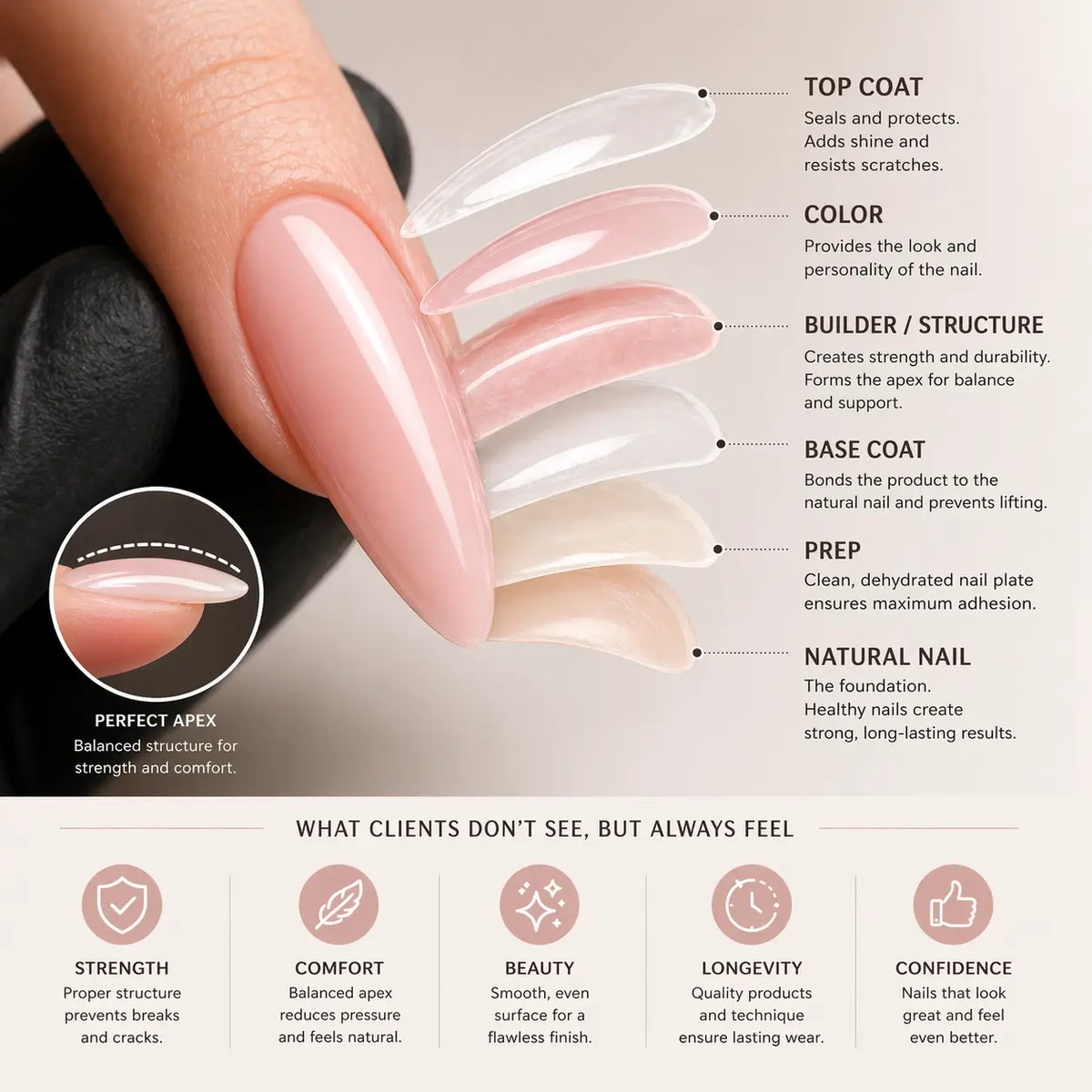
When clients admire a fresh set of nails, they usually notice the color, shine, or design. But what truly defines a perfect nail set goes far beyond what’s visible.
Behind every flawless manicure is a combination of structure, balance, and precision—details that clients may not consciously see, but immediately feel through comfort, durability, and wear.
This is the real anatomy of a professional nail set.
It Starts Beneath the Surface
The success of any nail service begins long before color is applied. The condition of the natural nail and how it’s prepared determines everything that follows.
A properly prepped nail ensures:
- Strong product adhesion
- Reduced lifting and peeling
- A clean, smooth foundation
This step is invisible in the final result—but it’s one of the biggest factors in how long a set lasts.
The Foundation Layer: Where Performance Begins
The base layer is not just a starting step—it’s the anchor of the entire structure.
When applied correctly, it:
- Bonds securely to the natural nail
- Creates flexibility to prevent cracking
- Supports all layers above it
A weak foundation leads to early failure. A strong one makes everything else work.
Structure and Apex: The Hidden Engineering
One of the most important elements of a perfect nail set is the apex—the highest point of the nail that provides strength and balance.
This is where real skill shows.
A well-built structure:
- Distributes pressure evenly
- Prevents breakage in high-stress areas
- Maintains a natural, elegant profile
Clients might not know what an apex is—but they’ll notice when their nails don’t break.
Balance Over Thickness
A common misconception is that thicker nails are stronger. In reality, balance matters more than bulk.
Professional nails are:
- Reinforced where needed (stress area)
- Slim at the sidewalls
- Evenly distributed in product
This creates nails that feel lightweight but durable, rather than heavy and unnatural.
Surface Perfection: Smooth Without Effort
A perfect nail set has a surface that looks effortless—but achieving that requires control.
Smooth application ensures:
- Even light reflection (clean shine)
- Better color payoff
- Minimal need for excessive filing
This is where high-quality products and proper technique work together.
Precision in Shape and Symmetry
Even small inconsistencies in shape can affect how professional a set looks.
Perfect shaping means:
- Symmetry across all nails
- Consistent length and alignment
- Clean, straight sidewalls
This level of precision is subtle—but it’s what makes a set look “expensive.”
Sealing: Locking Everything In
The final layer protects all the work underneath.
A properly sealed nail:
- Resists chipping and lifting
- Maintains shine over time
- Protects structure from daily wear
This step completes the system—not just visually, but functionally.
The Feel Factor: What Clients Notice Instantly
Clients may not analyze technique—but they instantly feel the difference between average and professional work.
A perfect nail set should feel:
- Lightweight and natural
- Balanced with no pressure points
- Smooth with no rough edges
- Flexible yet strong
This comfort is what keeps clients coming back.
Longevity Is the Real Test
A nail set isn’t judged on day one—it’s judged over time.
High-quality work will:
- Grow out cleanly
- Maintain structure for weeks
- Resist lifting and breakage
- Keep its finish longer
This long-term performance reflects the quality of every step before it.
Conclusion
The anatomy of a perfect nail set isn’t defined by color or design—it’s built through precision, structure, and attention to detail.
From prep to final seal, every layer plays a role in creating nails that don’t just look good, but feel right and last longer.
Because in professional nail work, the most important details are often the ones clients never see—but always experience.