 Gel Polish
 Nail Lacquer
 Acrylic
 Nail Tools
 LED Lamps
 Pedicure Chairs
 Nail Art
 Furniture
When Nail Polish Gets Too Thick: Why Polish Thinner Can Bring a Favorite Color Back to Life
August 15, 2026
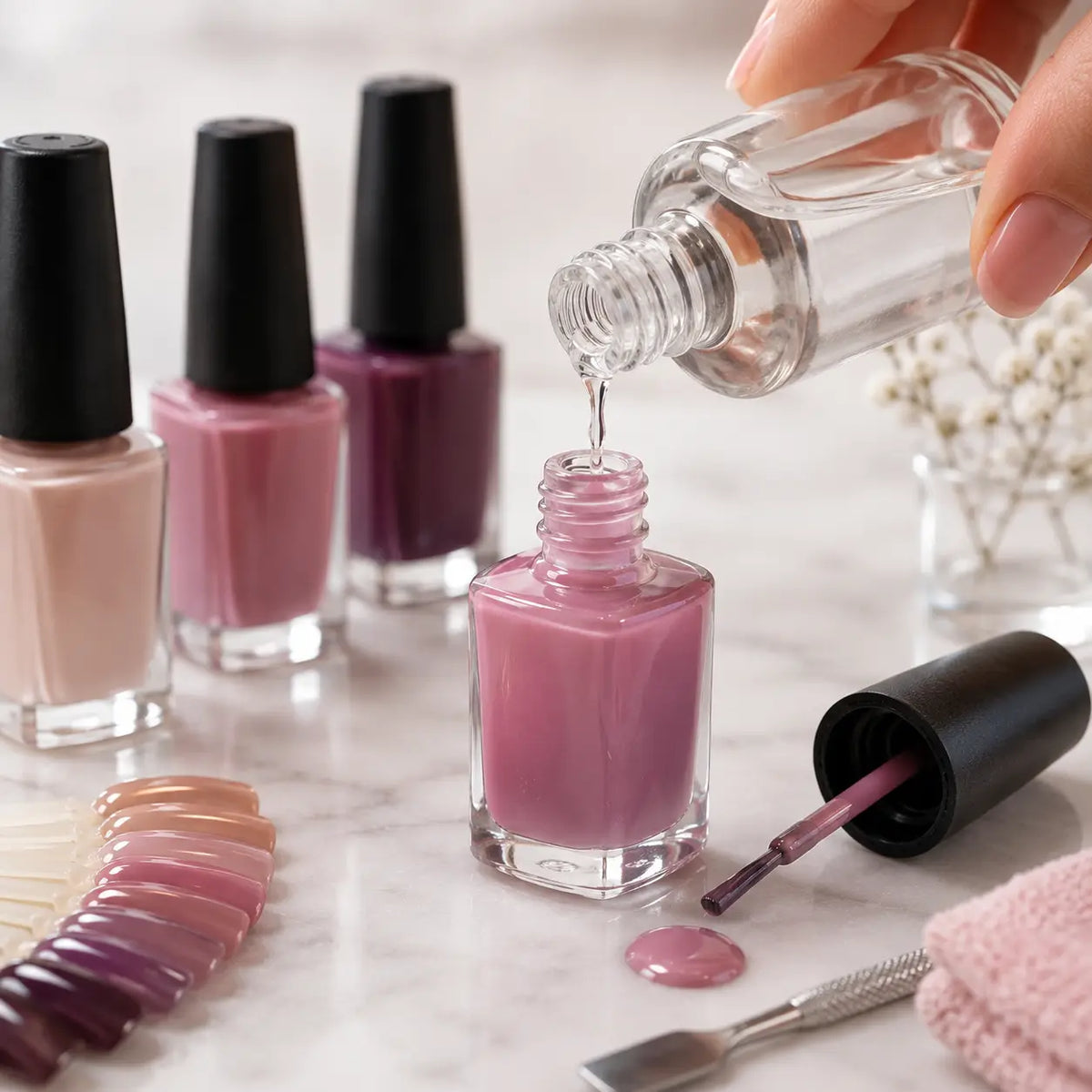
There is a frustrating moment that almost every nail technician has experienced.
You reach for a favorite polish, open the bottle, and discover that the color you know and love has suddenly become thick, stringy, or difficult to apply.
The first thought might be, "Is this bottle finished?"
Not necessarily.
Over time, nail polish can gradually change consistency as some of its more volatile ingredients evaporate. A polish that was once smooth and easy to apply can eventually become thicker and harder to work with.
That's where polish thinner can become a surprisingly useful addition to a nail technician's supply collection.
Why Does Nail Polish Get Thick?
Nail polish is made from a carefully balanced mixture of ingredients.
As a bottle is opened repeatedly, some volatile solvents can slowly evaporate. The remaining formula can become more concentrated, which may cause the polish to feel thicker than it did when it was new.
Frequent use can make this more noticeable.
Every time the bottle is opened, air gets into the container and some of the ingredients can gradually escape.
Eventually, a once-perfect polish may become noticeably harder to apply.
Thick Polish Doesn't Always Mean Bad Polish
A thickened bottle isn't necessarily a bottle that has completely lost its usefulness.
If the polish is otherwise still suitable for use and has simply become too viscous, the problem may be its consistency rather than the color itself.
This is one reason polish thinner can be useful.
Instead of immediately throwing away a favorite shade, a technician may be able to adjust its consistency using a thinner specifically designed for nail polish.
What Does Polish Thinner Actually Do?
Polish thinner is formulated to help restore some of the solvents that may have been lost through evaporation.
When the appropriate thinner is added according to its instructions, it can help make a thickened polish more fluid and easier to apply.
The goal isn't to completely change the product.
It's to help bring the consistency closer to what it was designed to be.
That distinction is important.
Why You Shouldn't Just Add Any Liquid
This is where product knowledge matters.
It might seem logical to add another solvent or household liquid to a thick polish, but that can interfere with the formulation.
Different products are made from different combinations of ingredients.
Using the wrong substance can potentially affect application, drying behavior, finish, or overall performance.
A proper nail polish thinner is specifically formulated for this purpose, making it a much more sensible choice than experimenting with unrelated liquids.
A Few Drops Can Make a Difference
One of the interesting things about polish thinner is that a relatively small amount can affect the consistency of a bottle.
That's why it's generally better to follow the thinner manufacturer's directions and add it gradually rather than pouring a large amount into the polish at once.
The goal is controlled adjustment.
Once the polish reaches a workable consistency, there may be no reason to add more.
Why This Matters in a Busy Salon
A professional nail salon can go through a large number of polish bottles.
Some colors may be used constantly.
Others may only come out for specific clients or seasonal designs.
That means certain bottles can spend a lot of time sitting in storage between appointments.
When an occasionally used color becomes thick, having polish thinner available can be useful for maintaining the salon's existing collection.
It can turn a potential waste problem into a simple maintenance step when appropriate.
Saving a Favorite Color
Not every nail color is easily replaceable.
A particular shade might be a client favorite.
It could be part of a salon's signature color collection.
It might also be difficult to find an exact replacement.
That's when a thick bottle can become especially frustrating.
If the formula is still usable and the problem is primarily its consistency, appropriate use of polish thinner may help extend the bottle's usefulness.
Sometimes the value isn't just the product itself.
It's the ability to keep a favorite shade available.
Thinner Isn't a Permanent Fix for Everything
It's important to remember that polish thinner isn't a magic solution.
If a polish has significantly deteriorated, separated unusually, developed an abnormal texture, or is otherwise no longer suitable for use, adding thinner won't necessarily restore it.
The condition of the product still matters.
Technicians should inspect their products regularly and follow the manufacturer's recommendations for storage and use.
The purpose of thinner is to address excessive thickness—not to turn an unusable product into a new one.
Proper Storage Still Matters
The best way to manage thickening is to minimize unnecessary changes to the polish in the first place.
Keeping bottles properly closed when they're not being used can help reduce solvent evaporation.
Storing products according to the manufacturer's recommendations is also important.
Even simple habits such as cleaning the bottle neck before closing the cap can help the lid seal properly.
Good storage practices and polish thinner can work together.
One helps prevent unnecessary thickening, while the other can help address it when it occurs.
A Useful Tool for Product Maintenance
Polish thinner may not be the most exciting item on a salon supply shelf.
Clients probably won't even notice it.
But technicians understand the value of small maintenance products that help keep everyday supplies usable.
A good salon inventory isn't only about having plenty of colors.
It's also about taking care of those colors.
That means proper storage, checking product condition, and having the right maintenance supplies available when needed.
Less Waste, More Use From Your Collection
Product waste is an ongoing concern for any salon.
Throwing away a bottle simply because it has become too thick can be frustrating, particularly when there is still plenty of product remaining.
When appropriate, polish thinner can provide another option.
Instead of immediately replacing the bottle, technicians can evaluate its condition and determine whether restoring its consistency is practical.
That can help a salon get more value from its existing collection.
Final Thoughts
A thick bottle of nail polish doesn't always mean the end of the road.
Over time, evaporation can change the consistency of lacquer, especially when bottles are opened frequently or stored for long periods.
Polish thinner provides a simple way to address that problem when the product is otherwise still suitable for use.
The key is using the correct thinner, adding it gradually according to instructions, and recognizing when a polish has deteriorated beyond what thinner can reasonably correct.
Because sometimes, that favorite color isn't finished.
It just needs a little help getting back to work.