 Gel Polish
 Nail Lacquer
 Acrylic
 Nail Tools
 LED Lamps
 Pedicure Chairs
 Nail Art
 Furniture
The Science Behind Gel Lifting — What Actually Happens Under the Nail Plate
November 27, 2025
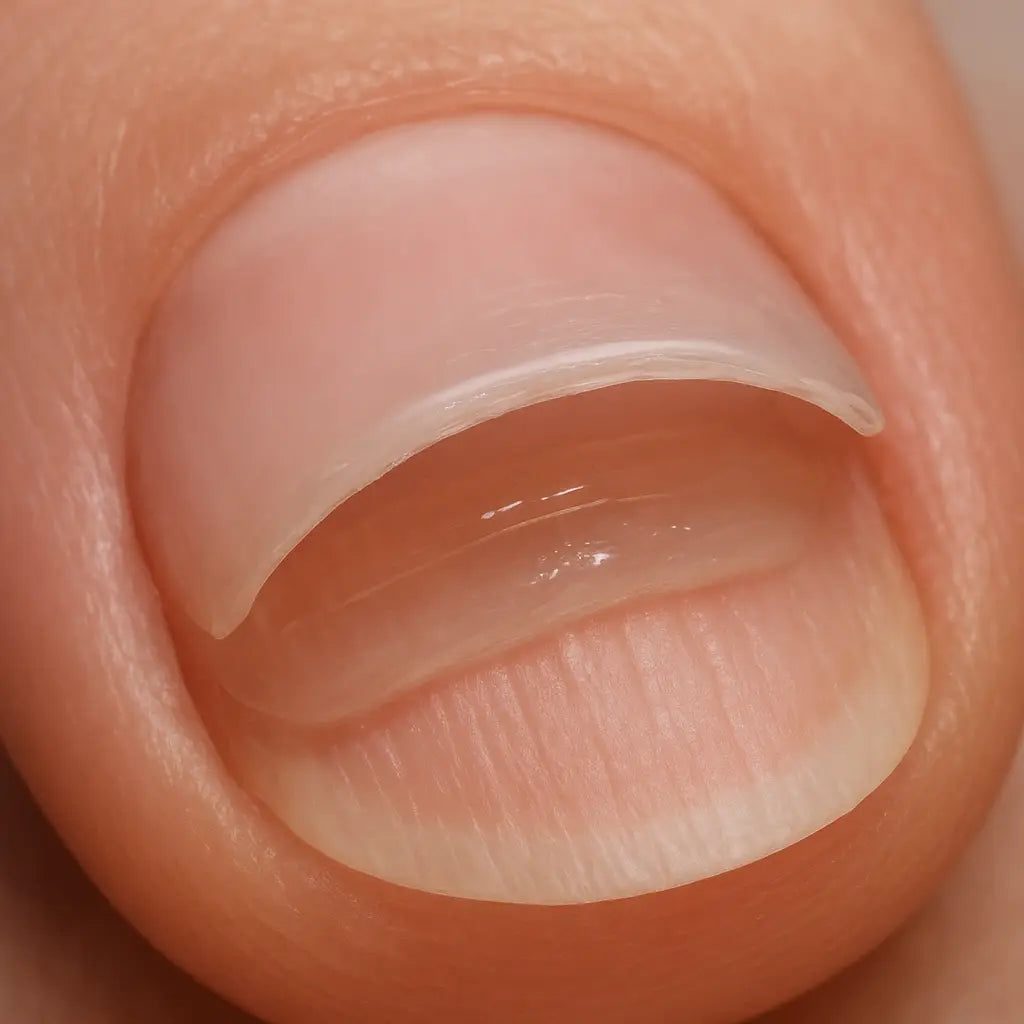
Gel lifting is one of the most common—and most frustrating—issues for both nail professionals and clients. It can ruin retention, affect the overall durability of enhancements, and in some cases even cause bacterial growth.
But the real question is: Why does gel actually lift?
What’s happening under the nail plate that causes adhesion to break?
Let’s break down the science in a clear, simple way so you understand exactly what’s going on at a biological and chemical level.
🧪 1. Nail Plate Biology: The Foundation of Adhesion
The natural nail plate is made of keratin, a protein arranged in tightly packed layers. For gel to bond properly, it must grip the microscopic ridges on the surface of these keratin layers.
When this bond fails, lifting happens.
Common reasons:
-
Nail plate too oily
-
Keratin layers still intact (not etched or dehydrated)
-
Dead cuticle layer left behind
-
Nail surface too smooth (gel can’t “grab” anything)
Key science:
Gel adheres through mechanical adhesion, not chemical fusion. That means it needs a slightly rough, dehydrated surface.
🩸 2. Moisture & Oil: The Invisible Enemy
Your nail plate naturally produces:
-
Sebum (oil)
-
Moisture (water)
-
Sweat
These substances sit between the gel and nail plate, weakening adhesion.
Why it matters:
✔ Gel is hydrophobic (it repels water)
✘ Water and oil create a slippery barrier
✔ Even a thin layer can cause microscopic lifting
This is why proper prep—especially dehydration and primer—is essential.
🔬 3. Cuticle Overgrowth: Tiny, But Powerful
If any cuticle tissue is left on the nail plate, gel cannot adhere.
This includes the invisible tissue stuck to the nail: the eponychium-derived cuticle.
Scientific reason:
Cuticle tissue is dead skin, not keratin.
Gel bonds to keratin, not skin → so lifting begins around the edges.
This is why true prep requires:
-
Eponychium softening
-
Gentle cuticle pushback
-
Removal of invisible cuticle with a bit or cuticle remover
🔥 4. Gel Shrinkage: A Chemical Reaction
When gel cures under UV/LED light, it undergoes polymerization—a process where ingredients cross-link to form a hard coating.
During polymerization:
-
Gel shrinks slightly (1–3%)
-
This shrinkage creates tension
-
If adhesion is weak → lifting starts immediately
You’ll see this mostly near the cuticle or sidewalls.
⛱ 5. Body Chemistry & “Problem Lifters”
Some clients naturally experience more lifting due to:
-
Hormonal imbalances
-
High body temperature
-
Hyperhidrosis (excess sweating)
-
Naturally oily nails
-
Medications (e.g., thyroid treatments, hormones, acne meds)
Why this matters:
Their nails produce more oil and moisture, making it harder for gel to bond.
Proper prep can help, but sometimes a different system (like acrylic or polygel) works better.
🛠 6. Improper Prep: The #1 Cause of Lifting
Even tiny mistakes create weak points where lifting begins.
Examples:
-
Not removing invisible cuticle
-
Filing too soft or too rough
-
Skipping dehydration
-
Flooding the cuticles
-
Not sealing edges
Gel is unforgiving—small errors = immediate lifting.
🧱 7. Structural Weakness & Flex Points
The natural nail bends and flexes. Gel needs to move with the nail.
If the builder or overlay lacks:
-
Apex
-
Proper thickness
-
Sidewall support
-
Stress point reinforcement
The gel cracks → air gets under → lifting spreads.
🌡 8. Client Behavior After Application
Gel bonds can be damaged by:
-
Washing hands right after the service
-
Picking or peeling
-
Heat exposure
-
Excessive water contact
-
Using nails as tools
Warm water expands the nail plate → gel weakens → lifting starts from underneath.
🧠 Final Takeaway: Why Gel Lifts
Lifting isn’t random.
It’s usually caused by a combination of biology, chemistry, and technique:
✔ Nail plate moisture
✔ Skin or cuticle left behind
✔ Chemistry mismatch
✔ Polymerization shrinkage
✔ Weak structure
✔ Client aftercare
When you understand the science, you can easily fix the problem.