 Gel Polish
 Nail Lacquer
 Acrylic
 Nail Tools
 LED Lamps
 Pedicure Chairs
 Nail Art
 Furniture
The Secret Behind Nail Retention: Why Some Products Outperform Others
June 08, 2026
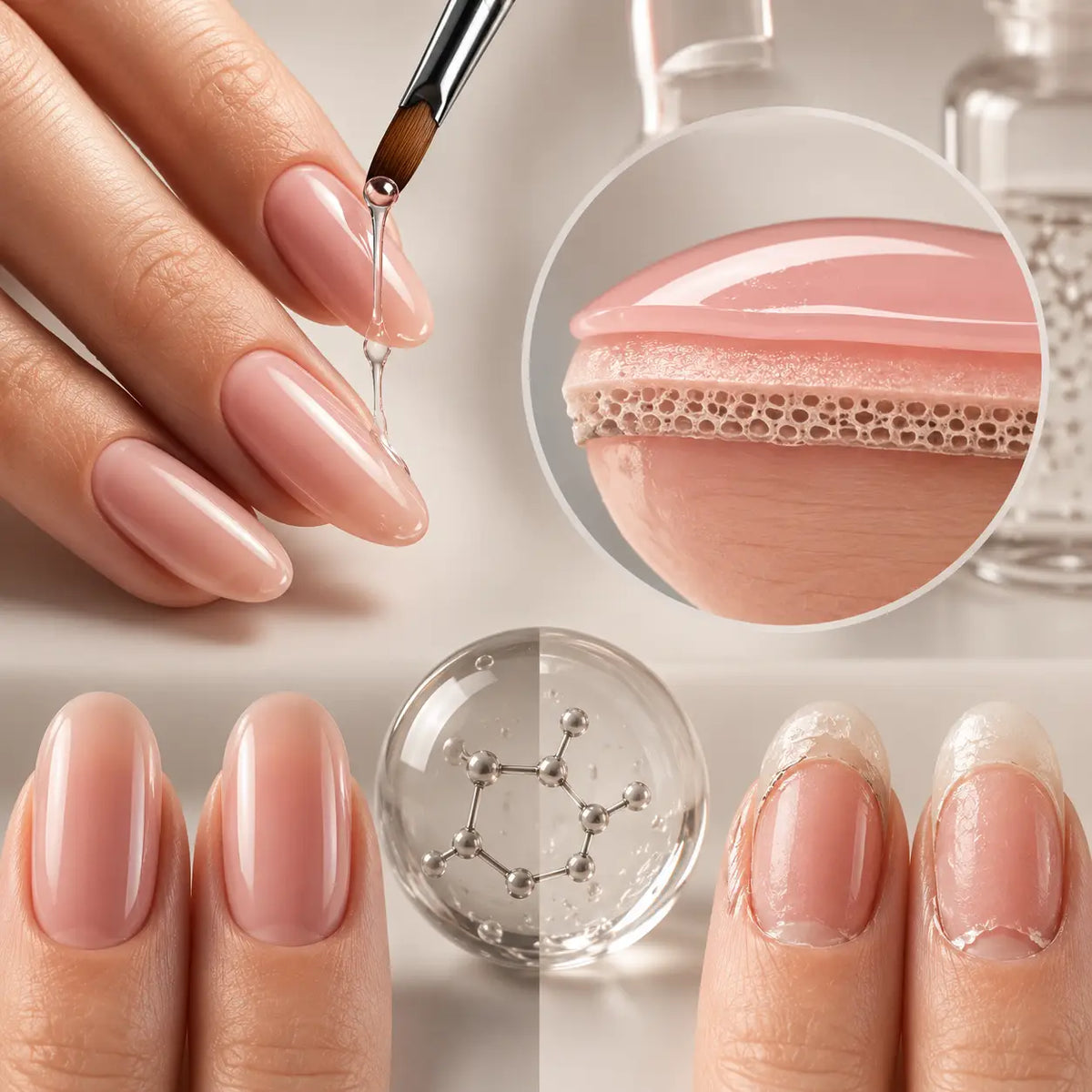
In the nail industry, one of the most common questions clients ask is simple yet important: “Why do some nails last for weeks while others start lifting or chipping within days?”
The answer is not just about skill or application technique—it’s deeply connected to the science of nail retention and how different products interact with the natural nail structure.
Understanding why some systems outperform others helps salons deliver more consistent results, improve client satisfaction, and reduce service issues like lifting, breakage, and premature wear.
What “Nail Retention” Really Means
Nail retention refers to how well a product stays bonded to the natural nail over time without lifting, separating, or breaking.
Good retention means:
- Strong adhesion to the nail plate
- Minimal lifting at the cuticle or sides
- Resistance to daily wear and tear
- Long-lasting structural integrity
Poor retention usually shows up as early lifting, chipping, or product separation.
But the difference is rarely random—it comes down to chemistry, preparation, and system compatibility.
The Science of Adhesion: How Products Bond to Nails
Natural nails are made of layers of keratin, which contain tiny microscopic ridges and oils. For a product to last, it must properly interact with this surface.
High-performance systems rely on three key principles:
1. Surface Dehydration
Moisture and oils prevent proper bonding. That’s why professional systems use dehydrators to prepare the nail plate.
2. Chemical Bonding
Primers and base coats create a molecular link between the natural nail and enhancement product.
3. Mechanical Grip
Slight surface roughness allows gels or acrylics to physically anchor into the nail plate.
When all three work together, retention becomes significantly stronger.
Why Some Products Outperform Others
Not all nail products are created with the same formulation standards. Some are designed as part of a complete system, while others are standalone formulas.
Professional systems outperform because they offer:
- Balanced chemistry between base, color, and top coat
- Controlled acidity and pH levels
- Consistent curing behavior under UV/LED
- Better flexibility and durability balance
Lower-quality or mixed systems often fail because ingredients are not designed to work together.
The Role of Nail Preparation (The Most Overlooked Factor)
Even the best product will fail if preparation is poor.
Retention is heavily influenced by:
- Improper cuticle cleaning
- Leaving oils on the nail plate
- Inconsistent buffing
- Dust contamination before application
Professional nail prep ensures the surface is clean, dry, and ready for bonding.
In fact, many retention issues blamed on products are actually prep-related.
Why Product Compatibility Matters
One of the biggest reasons some nails last longer than others is system compatibility.
Mixing different brands or formulas can cause:
- Chemical mismatch
- Uneven curing
- Weak adhesion layers
- Premature lifting
Professional-grade systems are engineered to work as a unit—from base to top coat—ensuring stable bonding throughout the entire nail structure.
Curing Technology and Its Impact on Retention
UV/LED curing plays a major role in how well products hold up over time.
If curing is:
- Too weak → product remains soft underneath
- Uneven → weak spots form
- Too strong → brittleness may occur
High-quality lamps ensure consistent energy output, allowing the product to fully polymerize and achieve maximum strength.
Flexibility vs. Strength: Finding the Balance
One of the secrets to long-lasting nails is balance.
A product that is too rigid may crack, while one that is too soft may lift or bend.
The best-performing systems offer:
- Controlled flexibility
- Impact resistance
- Long-term durability
- Natural nail movement adaptation
This balance is what allows nails to last through daily activities without failure.
Environmental and Lifestyle Factors
Even perfect application and high-quality products must compete with real-life conditions.
Retention can be affected by:
- Water exposure
- Cleaning chemicals
- Physical work
- Nail biting or picking habits
- Temperature changes
This is why lifestyle-based product selection is essential for long-term success.
Why Some Systems Simply Perform Better
High-end nail systems outperform cheaper alternatives because they are developed with:
- Advanced polymer chemistry
- Controlled curing response
- Layer compatibility testing
- Long-wear performance standards
These systems are not just individual products—they are engineered ecosystems designed for consistency.
The Technician’s Role in Retention
Even with the best products, technician technique is critical.
Retention improves when technicians:
- Follow proper prep steps
- Apply thin, even layers
- Seal edges correctly
- Avoid over-filing natural nails
- Use correct curing times
Skill and product quality must work together for optimal results.
Final Thoughts
The secret behind nail retention is not one single factor—it is a combination of science, system compatibility, preparation, and application technique.
Some products outperform others because they are designed as complete systems with balanced chemistry and predictable behavior. When paired with proper nail preparation and skilled application, they deliver stronger adhesion, longer wear, and more reliable results.
For salons, understanding this science is not just technical knowledge—it is the foundation of delivering consistent, high-quality nail services that clients can trust.