 Gel Polish
 Nail Lacquer
 Acrylic
 Nail Tools
 LED Lamps
 Pedicure Chairs
 Nail Art
 Furniture
Why Bit Quality Matters: Ceramic vs Tungsten Carbide vs Diamond Bits
December 12, 2025
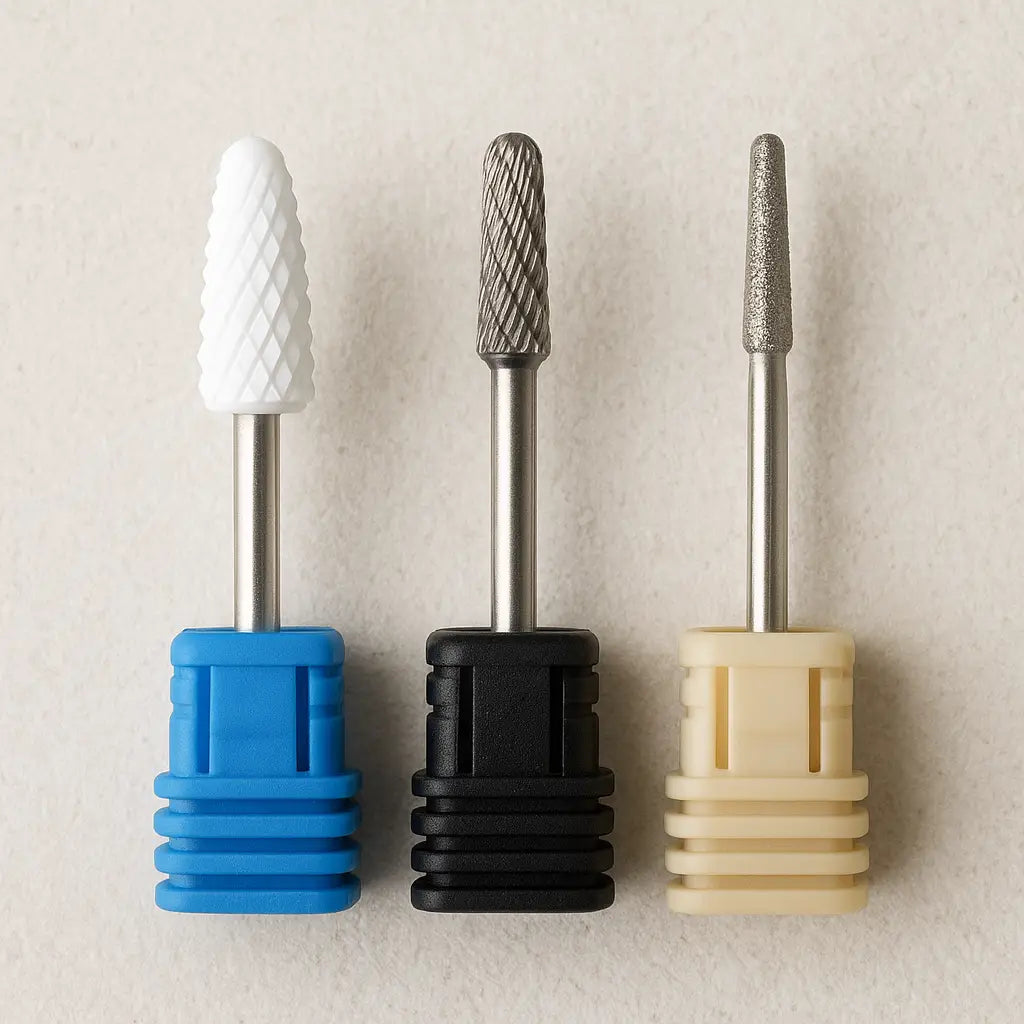
When it comes to e-files, the drill bit you choose can make or break your service. Many nail techs focus on speed settings or technique, but bit quality and material play an equally critical role in performance, safety, and results.
Ceramic, tungsten carbide, and diamond bits are the most commonly used — yet they behave very differently on the nail. Understanding how each one works helps you choose the right bit for each service and avoid unnecessary damage, heat, or product removal issues.
Let’s break it down.
Why Bit Quality Is So Important
Not all drill bits are created equal. A high-quality bit:
-
Removes product efficiently without excessive pressure
-
Reduces heat and friction
-
Maintains sharpness over time
-
Provides smoother, more controlled results
-
Minimizes damage to the natural nail
Low-quality or worn bits can cause skipping, burning sensations, uneven removal, and nail plate thinning — even when your technique is correct.
Ceramic Bits: Smooth & Heat-Reducing
Best for: Gel polish removal, builder gel, soft gel enhancements
Ceramic bits are known for their smooth cutting action and ability to disperse heat. They are lighter than metal bits and glide over the surface instead of aggressively tearing through product.
Pros
-
Generates less heat than metal bits
-
Smooth, controlled removal
-
Ideal for clients with sensitivity
-
Easy to clean and sanitize
Cons
-
Can dull faster if low quality
-
Not ideal for very hard acrylics
Best Use Tip:
Use ceramic bits at medium speed with light pressure to remove gel layers efficiently without overheating the nail.
Tungsten Carbide Bits: Power & Precision
Best for: Acrylics, hard gel, thick overlays, bulk removal
Tungsten carbide bits are metal bits with fluted cutting edges. They are extremely durable and aggressive, making them perfect for removing large amounts of product quickly.
Pros
-
Very long-lasting
-
Removes hard products fast
-
Excellent control when used properly
Cons
-
Can generate heat if pressure is too heavy
-
Not beginner-friendly
-
Risk of nail damage if used incorrectly
Best Use Tip:
Always use carbide bits at higher speeds with minimal pressure. Let the bit do the work — not your hand.
Diamond Bits: Detailing & Prep Specialists
Best for: Cuticle work, nail prep, refining, sidewalls
Diamond bits are coated with fine diamond particles rather than sharp blades. They grind rather than cut, making them ideal for precision work close to the skin.
Pros
-
Extremely precise
-
Gentle on the natural nail
-
Ideal for cuticle and prep work
Cons
-
Not suitable for bulk removal
-
Quality varies greatly depending on coating
Best Use Tip:
Choose fine or extra-fine diamond bits for cuticle prep to avoid over-thinning the nail plate.
How to Choose the Right Bit for Each Service
| Service Type | Recommended Bit |
|---|---|
| Gel polish removal | Ceramic |
| Builder gel removal | Ceramic or fine carbide |
| Acrylic removal | Tungsten carbide |
| Cuticle prep | Diamond |
| Sidewall refinement | Diamond |
| Product debulking | Tungsten carbide |
Using the wrong bit for the job often leads to unnecessary pressure, heat buildup, and inconsistent results.
Why Investing in High-Quality Bits Pays Off
High-quality bits:
-
Stay sharp longer
-
Provide consistent performance
-
Reduce service time
-
Improve client comfort
-
Protect the natural nail
Cheap bits may save money upfront, but they often dull quickly and increase the risk of mistakes — costing more in the long run.
Final Thoughts
Understanding the differences between ceramic, tungsten carbide, and diamond bits helps you work smarter, safer, and more efficiently. Each bit has a specific purpose, and mastering when to use them is a key step toward professional-level results.
When you invest in quality bits and use them correctly, your services become faster, cleaner, and more comfortable — for both you and your clients.