 Gel Polish
 Nail Lacquer
 Acrylic
 Nail Tools
 LED Lamps
 Pedicure Chairs
 Nail Art
 Furniture
Why Foot Spa Design Influences Client Relaxation
January 25, 2026
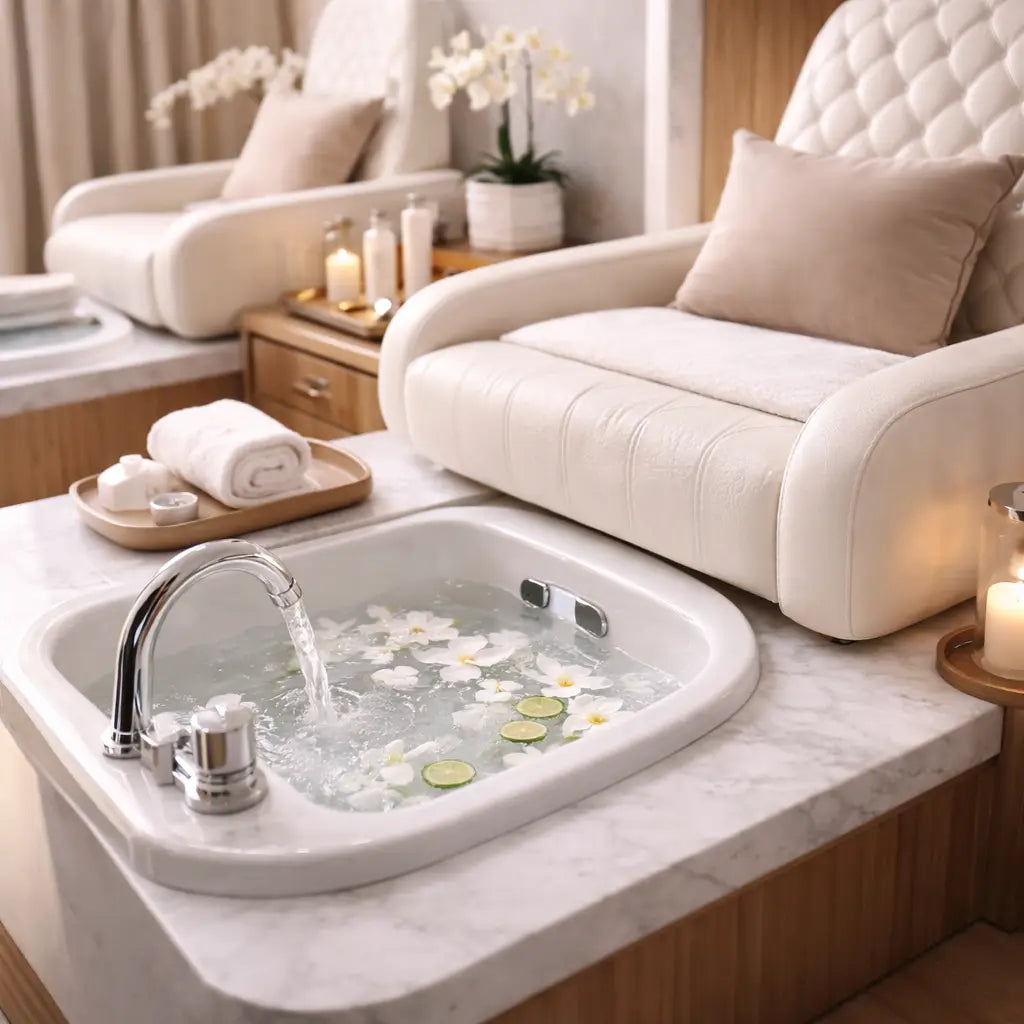
In a foot spa, relaxation doesn’t begin with water or massage—it begins with design.
From the shape of the chair to the placement of the basin, every detail in foot spa equipment silently affects how clients feel. While most salons focus on treatments and products, the true foundation of relaxation often lies in something less obvious: the design of the foot spa itself.
Design Shapes First Impressions
Before a single service begins, clients subconsciously evaluate their environment.
A well-designed foot spa creates:
-
A sense of cleanliness and order
-
Visual calm and balance
-
Confidence in professionalism
When equipment looks intentional rather than improvised, clients feel safe and cared for. That emotional response sets the tone for the entire experience.
Ergonomics = Comfort Without Effort
True relaxation happens when the body doesn’t need to adjust.
Foot spa design influences:
-
Leg positioning
-
Back and shoulder support
-
Natural posture during long sessions
If a chair is too stiff, too low, or poorly angled, clients may not complain—but their bodies remain tense.
Good ergonomic design removes that tension without being noticed.
Spatial Design Reduces Mental Stress
A cluttered or cramped foot spa area creates subconscious pressure.
Thoughtful design provides:
-
Balanced spacing between stations
-
Clear movement paths for technicians
-
Visual simplicity
When the environment feels spacious and organized, clients mentally slow down.
Relaxation becomes automatic rather than forced.
Material Choices Affect Sensory Experience
Foot spa equipment is not just functional—it’s tactile and visual.
Materials influence perception:
-
Smooth surfaces feel premium
-
Soft textures feel calming
-
Solid structures feel reliable
Even without touching the equipment directly, clients sense quality through sight and proximity.
Quiet Design Feels Luxurious
Noise is one of the biggest enemies of relaxation.
High-quality foot spa design minimizes:
-
Vibrations
-
Mechanical sounds
-
Visual distractions
When equipment operates quietly and smoothly, clients associate the experience with luxury—even if they can’t explain why.
Design Impacts Service Flow
A well-designed foot spa doesn’t just benefit clients—it helps technicians work naturally.
When equipment supports smooth workflow:
-
Movements feel effortless
-
Timing becomes consistent
-
Services feel unhurried
Clients interpret this as professionalism and confidence, which deepens relaxation.
Relaxation Is Engineered, Not Accidental
Most clients believe relaxation comes from massage techniques or products.
In reality, it’s often the invisible design choices that matter most.
Foot spa design influences:
-
Physical comfort
-
Emotional security
-
Perception of quality
-
Willingness to return
In other words, relaxation is not just delivered—it is built.
Final Thought
A foot spa is more than a chair and a basin.
It is an environment designed to tell the body and mind:
“You can let go now.”
And when design communicates that message clearly, relaxation becomes inevitable.