 Gel Polish
 Nail Lacquer
 Acrylic
 Nail Tools
 LED Lamps
 Pedicure Chairs
 Nail Art
 Furniture
Why Some Nail Enhancements Feel Heavy (Even When They Look Thin)
December 16, 2025
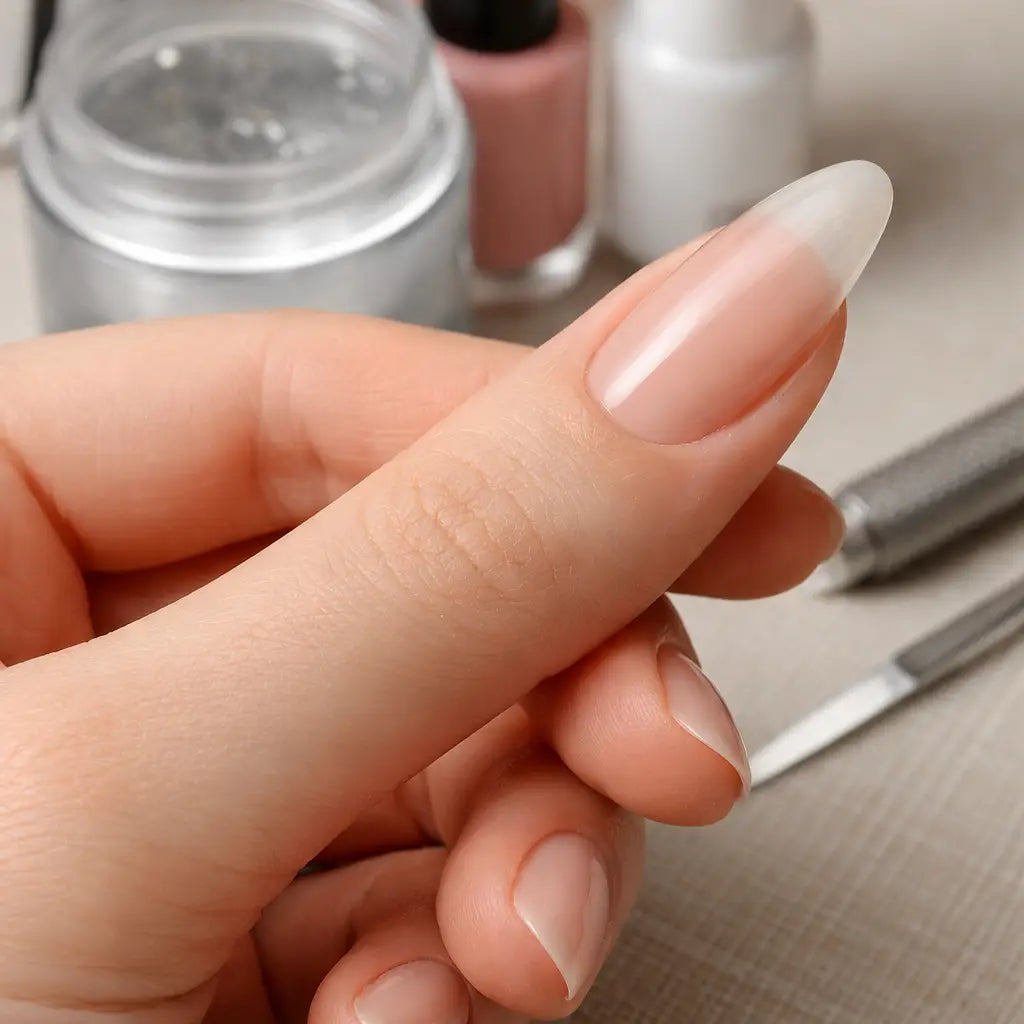
Have you ever created or worn a nail set that looks thin, sleek, and well-balanced — yet somehow feels heavy on the nails?
This is one of the most misunderstood issues in nail enhancements, and it has nothing to do with length alone.
In reality, nail “heaviness” is influenced by product density, structure, placement, and balance — not just thickness. Let’s break down the real reasons this happens and how to fix it.
1. Heaviness Isn’t About Thickness — It’s About Density
Two nail enhancements can look identical in thickness but feel completely different when worn.
Why?
Because not all nail products weigh the same.
-
Some builder gels are denser and heavier by nature
-
Some acrylic powders have higher mass per layer
-
Thick viscosity does not always equal lightweight structure
A dense product applied thinly can still feel heavier than a lighter product applied slightly thicker.
What this means:
Choosing the right formula matters just as much as application technique.
2. Poor Apex Placement Shifts Weight Forward
One of the most common causes of a “heavy” feeling is incorrect apex placement.
When too much product is placed:
-
Too close to the free edge
-
Too far forward on the nail
-
Evenly spread instead of strategically structured
…the nail becomes front-heavy, creating pressure on the natural nail plate.
Even if the enhancement looks thin from the side, poor weight distribution makes it feel uncomfortable — especially during daily tasks.
3. Flat Structure Creates Pressure, Not Support
A thin nail without proper structure doesn’t flex naturally — it pulls.
Flat enhancements:
-
Lack internal strength
-
Transfer stress directly to the nail plate
-
Create a dragging or weighted sensation
Proper structure allows the nail to carry force, not press it downward.
This is why a well-built nail can feel lighter than a thinner but poorly structured one.
4. Product Layering Adds Hidden Weight
“Heavy” nails are often the result of layer stacking, not a single product.
Examples include:
-
Thick base coat layers
-
Multiple color coats with high pigmentation
-
Builder gel overlays without refinement
-
Heavy top coats applied too generously
Each layer may be thin on its own — but combined, they add unnecessary mass.
Tip:
Refining between layers and controlling application volume dramatically reduces weight without sacrificing durability.
5. Incorrect Nail Balance Affects Wear Comfort
A balanced nail should feel like an extension of the finger — not something sitting on top of it.
When enhancements are:
-
Too rigid
-
Overbuilt at stress points
-
Unbalanced from cuticle to free edge
…the wearer perceives them as heavy, even at short lengths.
This is especially noticeable for clients who:
-
Use their hands frequently
-
Type often
-
Are sensitive to pressure changes
6. Natural Nail Flexibility Plays a Role
Not all natural nails respond the same way to enhancements.
-
Flexible nail plates amplify the sensation of weight
-
Rigid enhancements on soft nails feel heavier
-
Poor compatibility between nail and product increases discomfort
Matching product flexibility to the natural nail helps reduce that “heavy” sensation significantly.
How to Make Enhancements Feel Lighter (Without Making Them Thinner)
✔ Choose formulas designed for balanced structure, not just strength
✔ Build with strategic apex placement
✔ Avoid over-layering products
✔ Refine and rebalance after curing
✔ Match product flexibility to the client’s natural nail type
Light-feeling nails are about engineering, not minimalism.
Final Thoughts
If a nail enhancement feels heavy, it’s rarely because it’s “too thick.”
It’s almost always due to product density, structure, and balance.
Understanding this difference allows nail technicians to:
-
Improve comfort
-
Increase retention
-
Create nails that look beautiful and feel effortless
True quality isn’t just seen — it’s felt.