 Gel Polish
 Nail Lacquer
 Acrylic
 Nail Tools
 LED Lamps
 Pedicure Chairs
 Nail Art
 Furniture
A Complete Guide to Safe Nail Filing — Grits, Shapes & When to Use Them
November 28, 2025
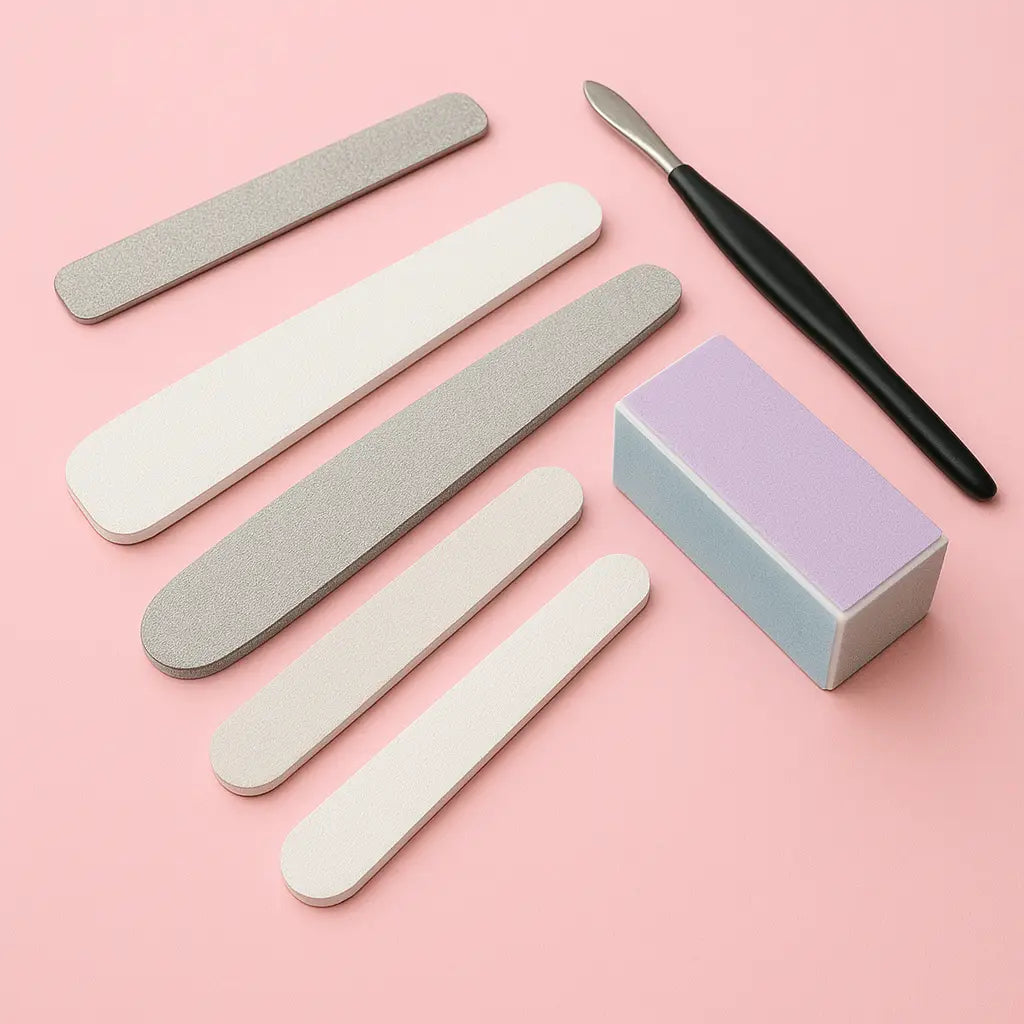
A Complete Guide to Safe Nail Filing — Grits, Shapes & When to Use Them
Nail filing seems simple — until it isn’t.
From over-filing and thinning the nail plate to choosing the wrong grit or using the wrong file angle, filing mistakes are one of the top causes of nail damage, breakage, and even painful sensitivity.
Whether you're a beginner or a seasoned nail technician, understanding grits, shapes, and safe techniques is essential.
This guide breaks it all down so you can file nails confidently, efficiently, and without harming the natural nail.
1. Grit 101 — What Nail File Numbers Really Mean
Nail file grit refers to how rough or smooth the file is.
The lower the number → the coarser the file.
The higher the number → the smoother the file.
Here’s the breakdown:
80 Grit (Very Coarse)
✔ Reshaping hard products like acrylic
✔ Reducing length of extensions quickly
✘ Never for natural nails
100 Grit (Coarse)
✔ Shaping acrylics, hard gels, builder gel
✔ Removing bulk
✘ Not suitable for natural nails
150 Grit (Medium)
✔ Refining structure of gels and acrylics
✔ Blending tips or forms
✘ Too rough for natural nails
180 Grit (Fine)
✔ Safe for natural nails
✔ Light shaping
✔ Smoothing after enhancements
240+ Grit (Very Fine)
✔ Best for natural nail finishing
✔ Prepping brittle or sensitive nails
✔ Smoothing nail edges
Rule:
If you’re unsure, choose 180 grit — the safest middle ground.
2. Nail File Shapes & What They’re For
Just like nail shapes, the shape of the file affects control and accuracy.
1. Straight Files
✔ Best for sidewalls
✔ Ideal for shaping square and coffin nails
✔ Great for sharp, precise lines
2. Half-Moon / Boomerang Files
✔ Straight edge + curved edge
✔ Perfect for reaching the cuticle area
✔ Great for all-around use
✔ Client-friendly ergonomic hold
3. Banana Files
✔ The curve follows the natural nail
✔ Great for curved enhancements
✔ Helps prevent over-filing in one spot
4. Buffer Blocks
✔ Smooth product
✔ Blend ridges
✔ Prepare surfaces before gel polish
✘ Not for shaping
✘ Don’t use aggressively on natural nails
3. Safe Nail Filing Techniques Every Tech Should Know
Filing incorrectly doesn’t just ruin nail shape — it can cause micro-tears, sensitivity, and lifting later on.
Here are the golden rules:
Rule #1: Always File in One Direction (For Natural Nails)
A sawing motion can rip keratin layers apart → causing peeling or cracks.
Use smooth, controlled strokes in the same direction.
Rule #2: Don’t Over-Filing Near the Sidewalls
This area is structurally weaker.
Over-thinning leads to:
✔ Lifting
✔ Cracking
✔ Painful sensitivity
Only refine — never dig in.
Rule #3: Choose the Right Angle
A 45° filing angle offers:
✔ Smooth shaping
✔ Cleaner edges
✔ Less pressure on the nail plate
Avoid holding the file flat — that thins the top surface.
Rule #4: Keep Nails Cool
Too much friction = heat buildup.
This causes soreness and damage.
Lift the file between strokes to cool the nail.
Rule #5: For Extensions, Work From the Center Out
To keep the structure stable:
✔ File the bulk at the center
✔ Refine the apex
✔ Then shape the sides
This prevents flat, weak enhancements.
4. When to Use Each Grit — Quick Reference Chart
| Task | Recommended Grit |
|---|---|
| Removing acrylic bulk | 80–100 |
| Shaping hard gel or builder | 100–150 |
| Refining product surface | 150–180 |
| Blending tips | 180 |
| Shaping natural nails | 180–240 |
| Pre-polish prep | 240+ |
| Smoothing ridges | 240–400 |
5. How to Prevent Nail Damage While Filing
Here are non-negotiable safety tips:
✔ Never file the natural nail with anything below 180 grit
✔ Replace worn-out files — dull files cause more damage
✔ Sanitize or use disposable files for hygiene
✔ Always support the nail from underneath
✔ Don’t over-file the cuticle area
✔ Avoid thinning the nail plate
If the nail bends or becomes hot → stop immediately.
6. Why High-Quality Files Matter
Cheap files shed grit, create uneven lines, and wear out fast.
High-quality files:
✔ last longer
✔ file smoothly
✔ reduce friction
✔ protect the natural nail
For salons, premium grits and washable files are a must for consistency and hygiene.
Conclusion
Safe nail filing is more than shaping — it’s a balance of technique, grit knowledge, and the right tools. When done correctly, filing improves nail strength, enhances the longevity of enhancements, and maintains overall nail health.
Whether you’re prepping natural nails or perfecting acrylic or gel extensions, understanding how and when to use each grit and shape will elevate your work and protect your clients.