 Gel Polish
 Nail Lacquer
 Acrylic
 Nail Tools
 LED Lamps
 Pedicure Chairs
 Nail Art
 Furniture
UV Nail Lamps Explained: How They Affect Curing, Longevity, and Nail Health
January 17, 2026
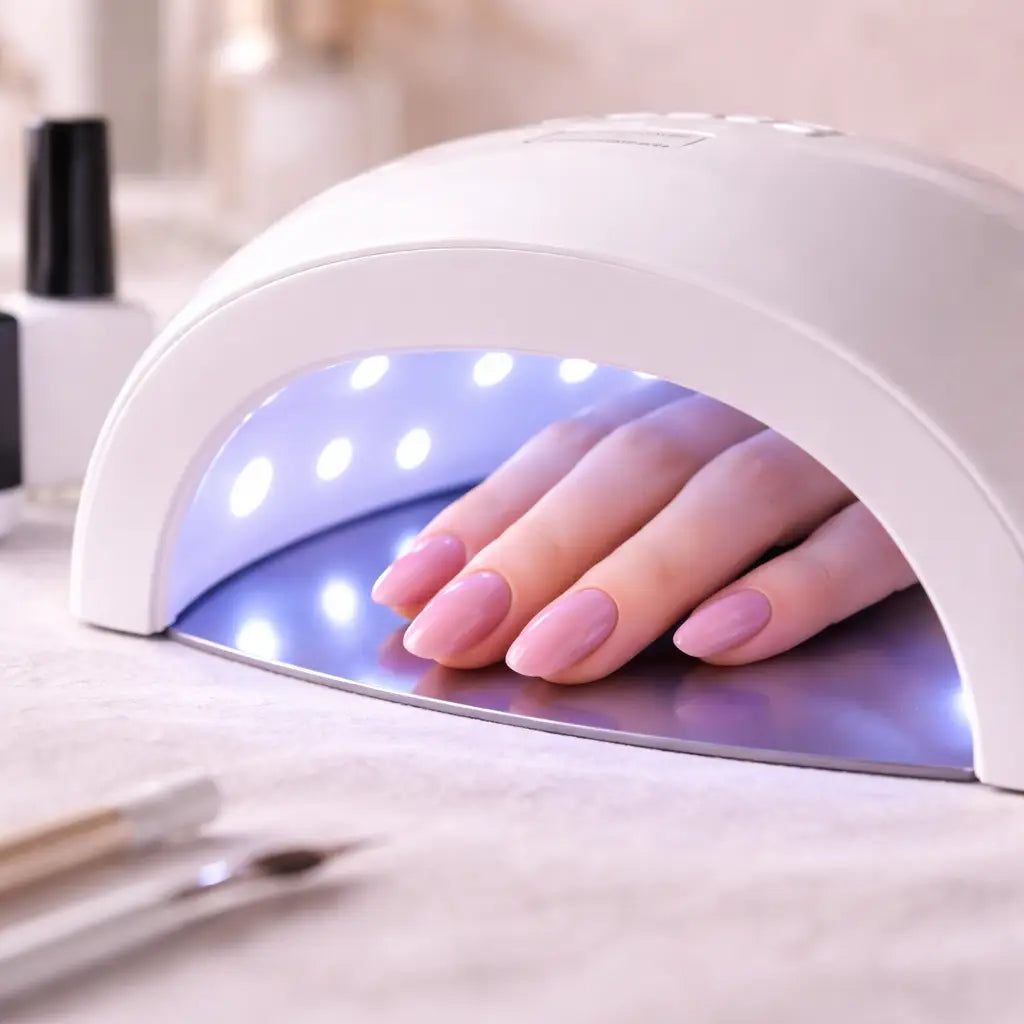
UV nail lamps are one of the most misunderstood tools in professional nail services. Many issues blamed on products—lifting, dull shine, soft layers, or premature chipping—are often caused by improper curing rather than the product itself. Understanding how UV (and LED) lamps actually work helps technicians get consistent results while protecting nail health.
This isn’t about buying the strongest lamp on the market—it’s about using the right light, correctly.
What UV Nail Lamps Actually Do
UV lamps don’t “dry” nail products. They cure them.
Professional gels, builders, and top coats contain photo-initiators that react to specific wavelengths of light. When exposed correctly, these initiators trigger polymerization—turning liquid product into a solid, durable structure.
If curing is incomplete:
-
The product may feel hard on top but remain soft underneath
-
Adhesion weakens over time
-
Shine dulls faster
-
Lifting and cracking appear weeks earlier than expected
UV vs LED: What’s the Real Difference?
Despite common belief, LED lamps are still a form of UV curing—they simply emit a narrower, more targeted wavelength.
UV Lamps
-
Broader wavelength range
-
Cure most gel systems reliably
-
Longer cure times
-
More forgiving with older formulations
LED Lamps
-
Faster curing
-
Require compatible formulations
-
More energy efficient
-
Can under-cure products not designed for LED output
Neither is “better” universally—the best lamp is the one designed to match your product system.
How Improper Curing Affects Nail Performance
When curing is inconsistent, problems often appear far from the salon chair.
Common symptoms of under-curing:
-
Sets that look perfect initially but fail within days
-
Free-edge cracking or peeling
-
Increased sensitivity or heat spikes during wear
-
Product that resists filing or feels rubbery
Over-curing, while less common, can also create issues:
-
Excessive brittleness
-
Reduced flexibility
-
Increased stress fractures over time
Balanced curing is key.
Why Lamp Design Matters More Than Wattage
High wattage doesn’t guarantee proper curing.
More important factors include:
-
Even light distribution
-
Reflective interior design
-
Correct diode placement
-
Stable wavelength output
A well-engineered lamp ensures all areas of the nail—especially sidewalls and apex—receive consistent exposure.
UV Exposure and Nail Health
When used correctly, professional UV lamps are considered safe for salon use.
Best practices:
-
Use proper cure times (don’t rush)
-
Avoid repeated partial curing
-
Apply thin, even layers
-
Keep lamps clean and well-maintained
Many technicians also choose to offer fingerless gloves or SPF as an added client comfort option.
The Takeaway: Lamps Are Part of the System
Your nail products don’t work in isolation. The lamp is part of the formulation, even if it’s not inside the bottle.
When curing is aligned with product design:
-
Application becomes more predictable
-
Retention improves naturally
-
Shine lasts longer
-
Nail integrity stays intact
Professional results aren’t just about skill—they’re about controlled chemistry, from application to cure.